Web3 Infra Series | Breaking the Verification Middleman Trap
Published on Feb 24, 2026
Every job application, apartment rental, and professional license
requires proving the same credentials you already proved to the
institution that issued them.
For example, universities confirmed your degree when you graduated,
but employers still need to pay $15–$20 to verify it again through
third-party services like the National Student Clearinghouse, with
bundled background check fees a lot of the time, pushing costs higher.
Professional boards confirmed your license when they issued it, but
clients pay verification fees to confirm you hold it.
Then you have background check companies that charge $30 to verify
employment history your previous employers already documented in their
systems.
This is actually a pattern that repeats thousands of times across your
career as each new employer, landlord, certification body, or client
requires fresh verification of credentials that never changed since
the original institution issued them. A bachelor's degree earned in
2015 requires re-verification in 2018 when you switch jobs, again in
2020 when you apply for graduate school, again in 2022 when you rent
an apartment, and again in 2024 when you apply for professional
certification, despite the credential itself remaining absolutely
identical across every verification instance.
Traditional credential verification operates via centralized
intermediaries that rake in fees each time someone needs proof of
qualifications they already earned, creating a multi-billion dollar
industry built on repetition where the same degree, license, or
employment record generates revenue streams decades after issuance.
National Student Clearinghouse processes millions of credential
verifications annually across its network of roughly 3,600
institutions, operating as a nonprofit that generated over $100
million in annual revenue from these verification services.
What binds these services together is a business model predicated on
institutional disconnect where universities, employers, and licensing
bodies refuse to issue portable proofs their own systems already
validated, forcing credential holders to repeatedly purchase
verification services rather than presenting an option for something
they actually control. The university confirmed your degree exists in
their database when you graduated, but they provide no mechanism for
you to prove that fact to third parties without paying a middleman who
queries the same database your diploma already referenced.
Web3 infrastructure completely dismantles this extraction with
verifiable credentials that institutions issue once as cryptographic
proofs holders control permanently, where verification happens through
mathematical certainty as opposed to database queries, and
privacy-preserving proofs enable selective disclosure without exposing
underlying data to verification services monetizing your personal
information.
Universities have something called registrar systems that track every
degree awarded, storing graduation records in databases they reference
when credential holders need verification for employment, further
education, or professional licensing. These records cost universities
basically nothing to maintain after initial data entry, existing as
permanent digital artifacts that never change once degrees are
conferred.
The problem is that universities provide no mechanism for graduates to
prove their credentials independently, instead requiring verification
requestors to contact registrar offices directly or use designated
third-party services like National Student Clearinghouse. A graduate
applying for jobs provides their degree information to potential
employers, but employers can't simply trust the claim, forcing them to
pay verification services that query the university's database and
confirm the degree exists exactly as the graduate claimed it did.
This creates a perpetual revenue stream where the same degree
generates verification fees dozens of times across a graduate's career
as each new employer, graduate program, or professional certification
body demands independent confirmation. A 2020 bachelor's degree might
get verified by five employers over the next decade, three different
professional certification programs, two graduate school applications,
and various background checks for apartment rentals or security
clearances, generating $500+ in aggregate verification fees from a
credential the university confirmed once when they issued it.
National Student Clearinghouse operates as a near-monopoly in academic
credential verification, processing credentials for over 3,600
institutions covering a staggering 97% of U.S. students. Universities
outsource verification to NSC to avoid administrative stress of
answering employer phone calls, but NSC charges fees for each
verification query ranging from $4.95 for basic enrollment
confirmations to $14.95–$19.95 for degree verifications, extracting
rent from data universities provide to NSC for free.
The economics create perverse incentives where universities have no
motivation to issue portable credentials because verification friction
generates no cost they bear. Employers pay verification fees,
graduates absorb delays waiting for confirmation, and NSC captures
revenue by inserting themselves between institutions and verification
requestors.
Universities offload administrative work and face no pressure to
change systems that work perfectly well from their perspective.
This verification process violates basic data ownership principles
where graduates earned credentials through years of academic work and
tuition payments, but possess no independent proof of achievement they
can present without involving the institution or its designated
verification agents. In reality, a diploma proves nothing beyond what
the paper states, as anyone can purchase fake diplomas online for
$100, making the physical document worthless without database
verification that only the university or its authorized proxies can
provide.

Uptick's DID infrastructure addresses this with W3C-compliant
decentralized identifiers enabling institutions to issue verifiable
credentials as cryptographically signed digital certificates graduates
control in personal wallets.
When a university confers a degree, they could issue a verifiable
credential cryptographically signed with the institution's private
key, containing degree details as structured data that graduates store
in self-sovereign identity wallets rather than relying on
institutional databases or paper diplomas. It's already possible for
organizations to implement aspects of this credential issuance model
through platforms like
Vouch, where anyone can issue credentials directly using holder DIDs or
generate claim links that graduates access to receive their verifiable
degrees, showing us that cryptographic credential issuance works
without requiring universities to develop custom Web3 infrastructure.
When graduates need to prove their credentials to employers, they
present the verifiable credential from their wallet, and employers
verify the university's cryptographic signature mathematically without
contacting the university or paying verification services. The
signature proves the credential came from the university, was issued
to the specific graduate presenting it, and hasn't been altered since
issuance, providing absolute mathematical certainty that eliminates
need for database queries or third-party verification services.
This works through public key cryptography where universities maintain
public keys published through verifiable on-chain registries that map
institutional identities to cryptographic addresses, allowing anyone
to reference and verify signatures, but only the university holds the
private key required to sign credentials. A forged credential would
fail signature verification immediately because the fraudster can't
produce a valid signature without the university's private key, making
forgery computationally infeasible rather than simply difficult to
detect through manual verification processes.
Uptick's Programmable NFT Protocol is designed to enable these
credentials as non-transferable tokens bound to specific DIDs with
soul-bound characteristics, preventing credential fraud where
individuals purchase or rent credentials they didn't earn. The
credential exists as an NFT tied to the graduate's DID through smart
contracts that prevent transfer to other accounts, as attempting to
move the credential fails because the receiving account can't produce
cryptographic proof linking them to the degree the credential
represents.
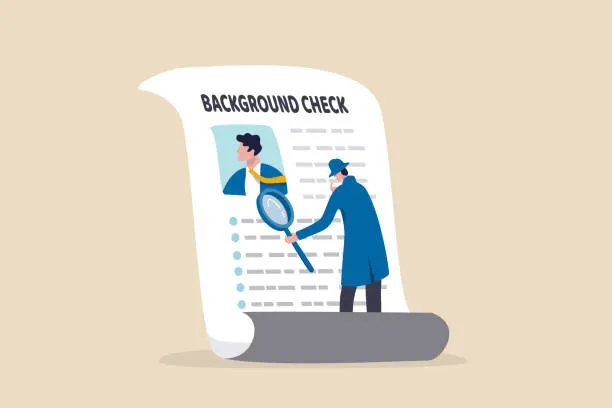
Background check companies generate huge revenue verifying employment
history that previous employers already documented in their internal
systems. Checkr, HireRight, and Sterling dominate the background
screening industry, valued at approximately $12 billion globally,
charging $30–100 per candidate to verify employment dates, job titles,
and salary information that employers possess in their HR databases.
The verification process operates through background check services
contacting previous employers directly, requesting confirmation that a
candidate worked there during claimed dates in claimed roles. This
requires substantial manual labor as HR departments field verification
requests, cross-reference internal records, and provide written
confirmation to background check services who forward results to
prospective employers.
Each job change triggers this verification cycle where the same
employment records get re-verified despite nothing changing about the
underlying facts. This means that someone who worked at Company A from
2018–2022 gets that employment verified when they join Company B in
2022, verified again when they join Company C in 2024, and verified
yet again when they apply for professional certification in 2025, even
though their employment at Company A remains an unchanging historical
fact confirmed multiple times.
Previous employers front the administrative costs fielding
verification requests but have no incentive to issue portable
employment credentials because verification friction creates no burden
they care about solving. Background check companies capture
verification fees by inserting themselves between employers needing
confirmation and previous employers holding records, and prospective
employers absorb costs because hiring unverified candidates creates
legal liability if employment claims prove fraudulent.
We end up in a situation where workers can't independently prove their
employment history without involving previous employers or paying
background check services to contact them. W-2 tax forms prove income
but not job titles or responsibilities, offer letters prove initial
employment but not duration, and pay stubs demonstrate employment
during specific periods but not complete job history.
No portable proof exists that workers control showing their complete
professional trajectory without requiring database queries previous
employers need to respond to.
Uptick's verifiable credential framework is designed to enable
employers to issue cryptographically signed employment credentials
when workers separate from companies, documenting employment dates,
job titles, responsibilities, and performance metrics as structured
data workers store in DID wallets they control.
When workers apply for new positions, they could present employment
credentials from previous employers, and prospective employers verify
signatures mathematically without contacting previous employers or
paying background check services.
This works through the same public key cryptography used for academic
credentials where previous employers sign employment records with
private keys, workers store signed credentials in wallets, and
prospective employers verify signatures using public keys that prove
credentials came from claimed employers without requiring direct
contact or database queries. The cryptographic signature provides
mathematical proof the employment record is authentic and unaltered
since issuance, eliminating need for phone calls, email confirmations,
or background check service intermediation.
Privacy-preserving verification becomes possible through
zero-knowledge proofs where workers prove specific employment claims
without revealing complete employment records. A worker could prove
they held a specific job title for more than two years at a particular
company without disclosing exact dates, salary information, or reasons
for leaving, satisfying verification requirements and protecting
personal information from unnecessary disclosure.
This selective disclosure already operates in production environments
where credential holders present multi-attribute credentials but
choose which specific attributes verifiers can access, disclosing
'Senior Manager, 2020–2024' and keeping performance evaluations and
compensation details private, with cryptographic signatures confirming
the disclosed attributes are authentic without exposing the complete
employment record.
Uptick's DID infrastructure enables this through ZK-proof protocols
where workers generate cryptographic proofs demonstrating their
employment credential satisfies specific criteria without revealing
underlying data, and verifiers confirm proofs mathematically without
accessing complete credentials. A prospective employer requiring proof
of five years management experience could verify a candidate's
employment history meets that threshold without learning their exact
employment timeline, salary progression, or specific companies they
worked for beyond confirming the aggregate experience requirement.
Professional licenses require verification at multiple career stages
as doctors, lawyers, accountants, engineers, and skilled trades
workers prove their credentials to employers, clients, insurance
companies, and regulatory bodies. State licensing boards maintain
databases tracking every licensed professional, storing records that
confirm individuals completed required education, passed examinations,
and maintain active status through continuing education requirements.
However, licensing boards provide no portable proof professionals can
present independently, instead requiring verification requestors to
query state databases directly or use specialized verification
services. Medical licensing verification services charge hospitals
$50–150 per credential check to confirm doctors hold active licenses
in specific states, legal directories charge law firms subscription
fees for attorney verification access, and engineering boards require
manual verification requests for each professional whose credentials
need confirmation.
This creates verification friction where licensed professionals
undergo credential checks every time they join new practices, take on
new clients, apply for malpractice insurance, or work across state
lines. A physician licensed in three states might have those licenses
verified five times annually as they obtain hospital privileges, join
medical groups, contract with insurance networks, and travel for locum
tenens work, generating aggregate verification fees exceeding $500
despite their licenses remaining active and unchanged throughout the
year.
The verification issue increases dramatically for professionals
holding multiple certifications where specialized credentials beyond
basic licensure require separate verification. A physician
board-certified in three specialties holds state medical licenses plus
specialty certifications from separate boards, creating verification
complexity where hospitals checking credentials must query state
databases for active medical licenses and contact specialty boards
confirming board certification status, multiplying administrative
overhead and verification costs.
Professional licensing boards tend to resist issuing portable
credentials because verification revenue funds board operations
through fees charged for database access, printed verification
letters, and online verification services. Medical boards in
particular generate substantial revenue from verification services as
hospitals, insurance companies, and credentialing organizations pay
recurring fees confirming physician license status that boards already
validated when issuing and renewing licenses.

Uptick's infrastructure enables licensing boards to issue verifiable
credentials as cryptographically signed proofs professionals store in
DID wallets, where smart contracts automatically update credential
status reflecting renewals, continuing education completion, or
disciplinary actions without requiring professionals to obtain new
credentials.
When doctors renew medical licenses, the licensing board updates the
credential's on-chain status through smart contract execution, and
anyone verifying the credential sees current status reflecting the
latest renewal without contacting the board or paying verification
fees. Medical boards might choose to implement this, issuing initial
licenses as verifiable credentials when physicians pass examinations,
then updating metadata through smart contracts as continuing education
requirements are met, with hospitals verifying credentials through QR
codes that physicians present rather than waiting days for
verification services to query state databases and return
confirmation.
This works through programmable credentials where initial issuance
creates a base credential tied to the professional's DID, and
subsequent board actions update on-chain metadata that verifiers
reference when checking credentials. A hospital verifying a
physician's license mathematically confirms the board's signature on
the base credential proving original licensure, then queries on-chain
data confirming current active status based on the board's most recent
renewal update, eliminating need for direct database queries or
verification service intermediation.
Selective disclosure enables professionals to prove license status
without exposing complete regulatory history where disciplinary
actions, complaints, or previous status changes remain private unless
specifically required for verification purposes. Essentially, this
means that a physician could prove they hold an active, unrestricted
medical license without revealing past complaints that were
investigated but resulted in no disciplinary action, satisfying
verification requirements and protecting privacy around regulatory
matters that didn't result in restrictions.

Current verification processes means that credential holders need to
expose more personal information than necessary to satisfy
verification requirements, creating privacy violations that
verification services monetize through data aggregation.
When employers request background checks, workers authorize
verification services to access complete employment histories, full
transcripts, comprehensive criminal records, and detailed credit
reports, despite employers only needing confirmation of specific
claims like degree completion or clean criminal background.
A job application might only require confirming a bachelor's degree
exists, but academic verification services receive authorization to
access complete transcripts including grades, courses taken, academic
probation incidents, and honors received. Employment verification
similarly provides complete job histories including reasons for
leaving, eligibility for rehire, and supervisor evaluations when
employers only need confirmation of employment dates and job titles.
This over-disclosure happens because verification processes operate
through binary authorization where workers grant complete access or
prevent verification entirely, lacking mechanisms for selective
disclosure that prove specific claims without revealing underlying
data. A candidate can't prove they graduated without exposing their
GPA, can't verify employment without revealing salary history, and
can't confirm license status without disclosing complete regulatory
history including complaints that never resulted in disciplinary
action.
Zero-knowledge proof protocols solve this through cryptographic
techniques enabling credential holders to prove specific statements
about their credentials without revealing underlying data, meaning
that a worker could prove they hold a bachelor's degree from an
accredited university without disclosing which institution, graduation
date, major, or GPA, satisfying basic degree requirements and
protecting detailed academic history from unnecessary disclosure.
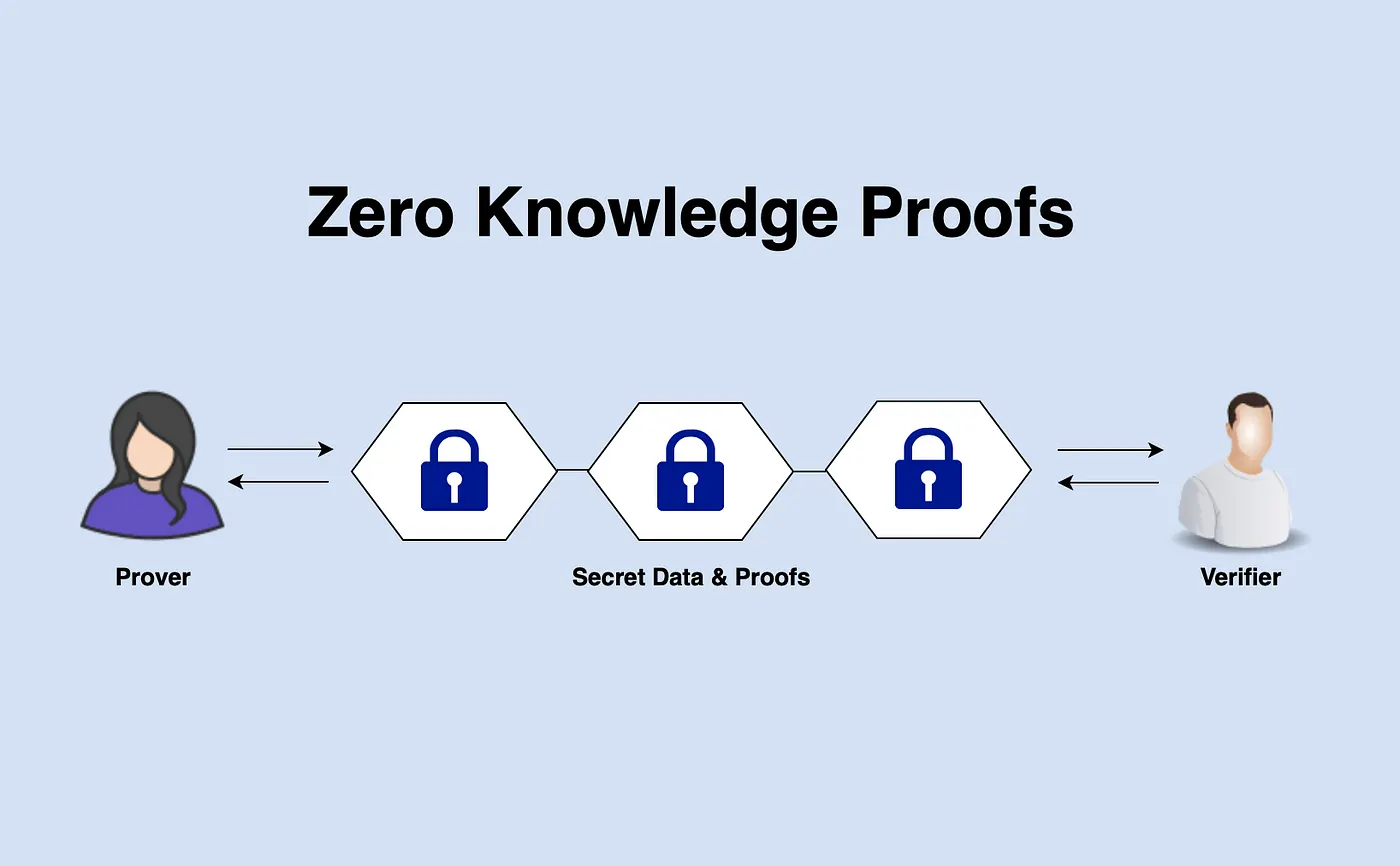
Uptick's infrastructure implements this via ZK-proofs that generate
cryptographic proofs, making sure credentials satisfy specific
criteria without exposing credential contents. When a verifier needs
confirmation that a candidate holds a relevant degree, the candidate's
wallet generates a zero-knowledge proof that their verifiable
credential satisfies the requirement, and the verifier confirms the
proof mathematically without accessing the actual credential
containing graduation date, specific institution, courses, or grades.
This enables nuanced verification scenarios where salary requirements
can be confirmed through range proofs demonstrating previous
compensation exceeded thresholds without revealing exact figures,
professional certifications can be verified without exposing dates
earned or renewal history, and security clearance status can be
confirmed without disclosing the level of clearance or agencies that
granted it.
Each verification discloses only the minimum information required to
satisfy verification purpose, protecting privacy and providing
mathematical certainty about claims being verified.
The verification middleman trap continues to persist because current
infrastructure fragments credential ownership across institutional
databases that holders can't access independently, creating artificial
dependency on services that query those databases and package results
for verification requestors.
Universities maintain degree records, employers maintain employment
records, and licensing boards maintain credential status, but none
provide portable proofs holders control and can present without
intermediation.
Changing this requires infrastructure where credentials exist as
cryptographically signed digital certificates holders store in
self-sovereign identity wallets, verification happens through
mathematical signature confirmation rather than database queries, and
selective disclosure enables privacy-preserving proofs that reveal
only information necessary for verification purposes.
Institutions already issue credentials through this infrastructure
without Web3 expertise, designing credentials through interfaces that
handle cryptographic signing automatically and enabling verification
through methods that work in physical spaces without requiring
always-online systems or specialized hardware, and each component
addresses specific failures in current systems by removing centralized
dependencies that enable extraction.
Uptick's DID infrastructure provides the identity layer enabling
credentials to bind to specific individuals through decentralized
identifiers that work across institutions without requiring central
registries or coordination between credential issuers.
A worker's professional credentials from multiple universities,
employers, and licensing boards can all reference the same DID,
creating a unified identity that aggregates credentials from disparate
sources into a single wallet the worker controls through cryptographic
keys rather than institutional permissions.
Verifiable credentials issued through W3C standards provide the data
layer enabling institutions to sign credentials cryptographically,
workers to store credentials in wallets they control, and verifiers to
confirm authenticity through signature verification without contacting
issuers. The credentials exist as structured JSON documents containing
claim data and cryptographic signatures proving issuers created the
claims, with the combination providing mathematical certainty about
credential authenticity.
Smart contracts provide the logic layer enabling dynamic credential
status updates where renewals, revocations, or modifications happen
through on-chain transactions rather than requiring new credential
issuance, so a medical license issued as a verifiable credential
doesn't become obsolete when renewed, and instead the licensing board
updates on-chain status reflecting the renewal, and verifiers checking
the credential reference current status automatically through smart
contract queries.
Zero-knowledge proof protocols provide the privacy layer enabling
selective disclosure where workers prove specific claims about
credentials without revealing underlying data, and the verification
requestor learns only what they need to know, with the worker
protecting detailed information from unnecessary disclosure but still
providing mathematical proof that their credentials satisfy
verification requirements.
Cross-chain interoperability via Uptick's Cross-chain Bridge (UCB) and
IBC protocols also enable credentials issued on different Web3
infrastructures to work together smoothly, preventing the disconnect
where credentials from universities using Ethereum-based systems
wouldn't interoperate with credentials from employers using
Cosmos-based infrastructure. The portability provides a way so that
workers can accumulate credentials from any issuer regardless of
blockchain choice and present unified credential sets to verifiers
regardless of underlying technical architecture.
The verification middleman trap persists because the institutions
creating the problem bear none of its costs, as universities,
employers, and licensing boards maintain database monopolies that
generate verification revenue precisely because they never issue
portable proofs, and nobody with the power to change that arrangement
faces sufficient pressure to do so. Workers absorb verification fees,
employers absorb background check costs, and verification
intermediaries collect rent from both sides of a transaction that
wouldn't require intermediation if credential issuers simply signed
their records cryptographically when they issued them.
What verifiable credentials change is the economic structure sitting
beneath the verification transaction, so that when a university issues
a cryptographically signed credential at graduation, every future
employer who verifies it does so mathematically without creating
revenue for a middleman querying the same database the diploma
referenced. The bachelor's degree earned in 2015 stops generating
verification fees in 2018, 2020, 2022, and 2024, because the graduate
carries a portable proof that requires no database access to confirm.
The institutional adoption question, however, is the real obstacle, as
platforms like Vouch already show us that cryptographic credential
issuance doesn't require universities to build custom Web3
infrastructure or develop deep technical expertise, but economic
incentives still point against adoption for institutions that profit
from verification friction. Medical boards generating revenue from
credentialing queries, NSC capturing fees from employer verifications,
and background check companies extracting billions from employment
confirmations all operate on revenue streams that disappear when
credential holders carry portable proofs that verify mathematically.
Uptick’s infrastructure provides the technical foundation for that
transition through decentralized identity, verifiable credential
standards, programmable smart contract logic, and zero-knowledge
privacy, creating the conditions under which credential issuers can
stop monetizing database access and start issuing portable proofs
their records already support. The transition happens when competitive
pressure, regulatory change, or credential holders demanding portable
proofs shift the calculus for institutions currently profiting from a
system built on their own administrative convenience rather than the
interests of the people those credentials represent.