Web3 Infra Series | The Surveillance State Comes to Britain | Why
Centralized Digital ID Is the Wrong Answer
Published on Oct 13, 2025
In 1785, English philosopher Jeremy Bentham designed the perfect
prison, the panopticon as he called it, featuring a central watchtower
surrounded by cells arranged in a circle that allowed a single guard
to observe every prisoner without them knowing whether they were being
watched. The psychological effect was profound, with inmates modifying
their behavior constantly and assuming surveillance even when none
existed, creating a state of perpetual self-monitoring that achieved
control through the mere possibility of observation.

Today, 240 years later, Britain is building Bentham’s panopticon on a
national scale through Prime Minister Keir Starmer’s announcement of
mandatory digital ID cards, signaling a fundamental shift in how
citizens relate to their government as they trade hard-won privacy
rights for the false promise of convenience. The timing reveals
everything about political opportunism disguised as progress, as
governments worldwide seize moments of crisis to normalize
comprehensive population monitoring and populist pressure over
immigration provides convenient cover for surveillance infrastructure
that extends far beyond its stated purpose.

The UK scheme, scheduled for implementation by 2029, requires all
citizens and legal residents to maintain smartphone-based digital
identities for employment verification, and though officials promise
these IDs won’t need daily carrying, the infrastructure being built
creates the backbone for something far more invasive than immigration
control. History teaches us that surveillance systems, once
established, never remain voluntarily limited in scope, evolving
instead into comprehensive tools of social control that would shock
their initial proponents.

The government’s sales pitch echoes familiar themes from authoritarian
regimes, offering promises of efficiency, security, and modernization
that make digital IDs seem like inevitable progress rather than a
potential overreach. If we cast our minds back to East Germany, the
Stasi turned citizen identification into a mechanism of pervasive
surveillance, tracking daily lives and controlling movement under the
guise of administrative necessity. Today, countries like Estonia,
Denmark, and Australia are cited as successful examples where digital
identity systems bring practical benefits, constructing a narrative of
technological advancement that masks deeper concerns around power and
control.
This framing paints surveillance infrastructure as mere administrative
convenience, glossing over the reality of unprecedented government
oversight.

If we scratch beneath this veneer of administrative efficiency, then a
much more troubling picture emerges, as these systems evolve with
frightening speed from limited-purpose tools into comprehensively
sinister surveillance infrastructure where today’s employment
verification becomes tomorrow’s access control for healthcare,
banking, transportation, and eventually every aspect of civic life.
The technical architecture reveals the true ambition, with centralized
digital identity systems creating comprehensive profiles that track
movements, transactions, relationships, and behaviors in real-time as
every verification request becomes a data point in vast government
databases building detailed maps of citizen activity.
Privacy advocates from Amnesty International UK warn that such systems
create “huge risks for identity theft and a honeypot for hackers and
online criminals,” but the cybersecurity risks absolutely pale beside
the political ones that emerge when governments accumulate
comprehensive digital dossiers on their populations. The temptation to
expand surveillance powers becomes irresistible once the
infrastructure exists, transforming what began as administrative
convenience into tools for social and political control that
fundamentally alter the relationship between individual autonomy and
state power.

Bentham’s panopticon was never actually built in his lifetime, but its
psychological principles have haunted prison design ever since, with
the genius lying in behavioral modification rather than architectural
innovation. The Victorian workhouses in 19th-century England
incorporated similar surveillance mechanisms, using strict observation
and movement controls to regulate the poor under the guise of
institutional care. When people believe they might be watched, they
police themselves, creating a system of control that operates through
the simple possibility of surveillance rather than its constant
presence.
Modern Britain is constructing a technological panopticon where
citizens know their every digital interaction might be monitored and
recorded, fundamentally altering how individual autonomy relates to
state power in ways that would have horrified even the architects of
liberal democracy.

The exclusion effects compound these surveillance concerns, as Amnesty
notes that “many older people will not have a smart phone or be able
to register properly” and “some people may have problems accessing
services”, creating systematic discrimination where technological
compliance becomes a prerequisite for full citizenship. Historically,
similar bureaucratic barriers like Jim Crow-era poll taxes and South
Africa’s pass laws used documentation requirements to disenfranchise
and segregate communities, showing how identity enforcement can become
a tool for social exclusion.

This effectively divides society into those who can navigate
government-mandated systems and those who cannot, establishing a
two-tier citizenship where basic rights depend on technological
literacy and smartphone ownership rather than legal status or
democratic participation.
Imagine what happens when basic rights like employment depend on
maintaining valid digital credentials, as governments gain
unprecedented power over individual behavior and citizens who dissent
from policies, participate in protests, or engage in political
opposition could find their digital identity privileges restricted or
revoked entirely. The infrastructure for economic exile becomes as
simple as updating a database entry, creating a system where political
conformity becomes necessary for economic survival and dissent carries
the ultimate penalty of digital exclusion from society.

In 1970, computer scientist James Martin wrote about the “fishbowl
effect” of centralized data systems, observing that the larger and
more valuable the data repository becomes, the more attractive it
appears to attackers who can focus their efforts on high-value targets
rather than scattered, smaller databases. Centralized digital identity
creates the ultimate expression of this principle, building
repositories that contain the digital identities of millions of people
and creating irresistible targets for hackers who can achieve maximum
damage with minimal effort.
When these systems are breached, and mathematical certainty tells us
they will be, the damage cascades across entire populations
simultaneously in ways that make individual identity theft look
trivial by comparison, as attackers gain access to comprehensive
personal profiles rather than isolated pieces of information.
Government data hoarding creates what constitutional scholars describe
as “moral hazard”, where the accumulation of power inevitably leads to
abuse as comprehensive surveillance infrastructure becomes a tool for
political control rather than administrative efficiency.

Every database faces constant attacks from sophisticated adversaries
including state-sponsored hackers seeking intelligence, criminal
organizations pursuing profit, and rogue insiders exploiting their
privileged access, making the question not whether these systems will
be compromised but when and how extensively the damage will spread.
Once attackers gain access to centralized repositories of personal
information that governments have so helpfully aggregated into
convenient packages, the breach affects entire populations rather than
individual accounts, creating cascading failures that compromise
everyone simultaneously.

In the 1990s, a group of cryptographers and computer scientists began
exploring radical ideas about digital privacy and individual
sovereignty, envisioning a future where mathematics, rather than law
or trust, would protect individual privacy against government
overreach and corporate surveillance. These “cypherpunks” laid the
foundation for modern blockchain technology and, pivotally for our
current crisis, decentralized identity systems that return control to
individuals rather than concentrating it in government databases.

The fundamental insight is still a powerful one, as the flaws of
centralized digital identity stem from centralized control rather than
digital verification itself, suggesting that self-sovereign identity
systems built on blockchain infrastructure can offer a radically
different approach that preserves verification benefits and eliminates
surveillance risks. Instead of concentrating control in government
databases that become targets for hackers and tools for political
oppression, these systems allow users to maintain their own
cryptographically-secured credentials and decide what information to
share, with whom, and under what circumstances.
As a result, personal data stays distributed across the network as
users maintain granular control over their information, creating
systems where verification becomes possible without the data
collection and surveillance that centralized systems require by
design. The technical foundation relies on proven cryptographic
techniques that enable verification without disclosure, allowing
someone to prove their right to work without revealing immigration
status, nationality, or address and demonstrating eligibility for
services without exposing their complete personal history to
government surveillance databases.
Zero-knowledge proofs make this possible through mathematical
breakthrough, allowing verification of specific claims without
revealing underlying data so a person can prove they’re over 18
without disclosing their exact birthdate, or demonstrate work
authorization without revealing their visa status or nationality.
These aren’t theoretical constructs but proven mathematical tools that
provide stronger security guarantees than centralized systems and
preserve individual privacy and autonomy, creating verification
without surveillance through mathematical certainty rather than
institutional trust.

The cypherpunk vision required more than cryptographic theory,
demanding practical infrastructure that could handle real-world
demands for security, scalability, and user experience as it bridged
the gap between theoretical possibility and practical application.
Each flaw in centralized systems like the UK’s digital ID scheme
points to specific technical requirements that decentralized
alternatives must address, from preventing government surveillance to
eliminating single points of failure to maintaining user autonomy over
personal data.
Among decentralized identity implementations, Uptick DID demonstrates
how these principles translate into practical infrastructure that
addresses each failure of centralized systems through proven technical
architecture.
The UK scheme’s fundamental vulnerability lies in centralization,
creating honeypots where attackers can compromise millions of
identities through a single breach. Uptick DID is built on a
distributed architecture using Cosmos-SDK, designed so that users
maintain cryptographic control over their own credentials through
private keys, reducing the concentration of identity data in central
databases.
Government lock-in represents another critical failure, as citizens
trapped in the UK system face no alternatives when their digital
identity privileges get restricted for political reasons or
bureaucratic errors. Uptick DID operates across multiple blockchain
environments through the Uptick Cross-chain Bridge and IBC protocols,
designed to provide consistent identity management across various
ecosystems such as Ethereum, Cosmos, Binance Smart Chain, and Polygon,
so users whose government-issued credentials face restrictions can
still verify their identity and access services through decentralized
networks that transcend political boundaries and cannot be
unilaterally revoked.
The surveillance architecture embedded in centralized digital ID
systems tracks every verification request, building comprehensive
profiles of citizen behavior that enable political control. Uptick DID
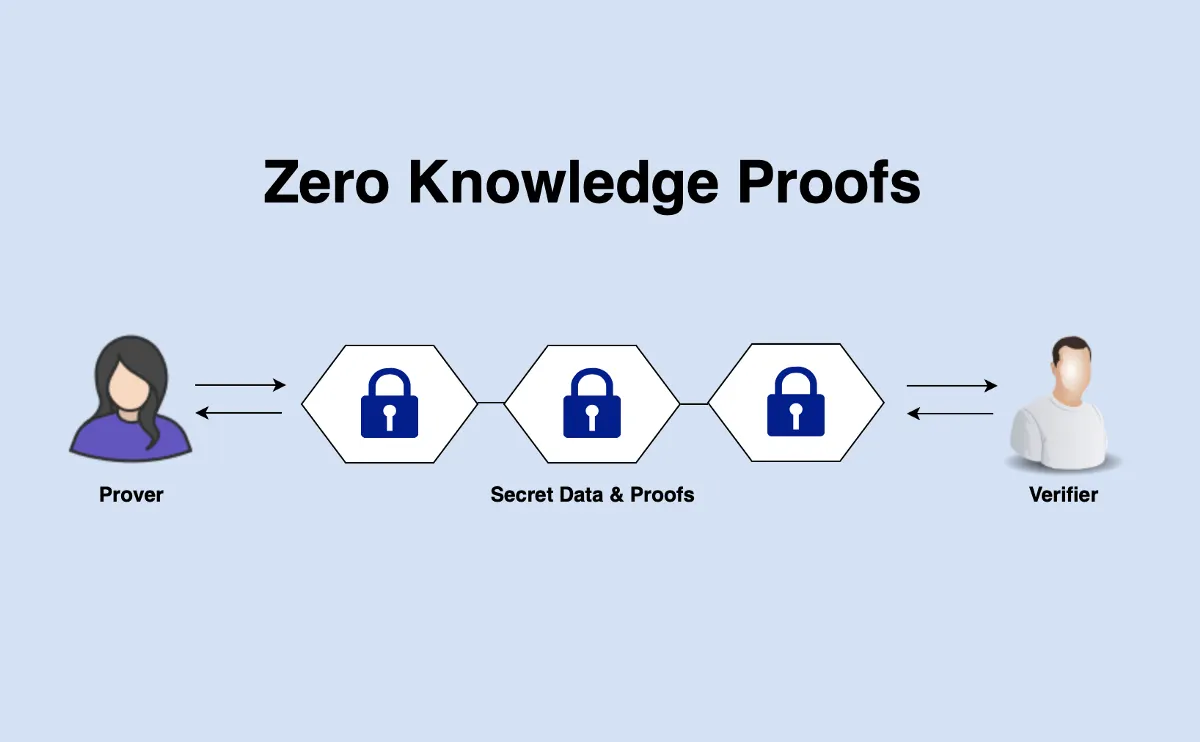
addresses this through verifiable credentials that prove identity
claims through zero-knowledge proofs, allowing users to demonstrate
they’re authorized to work without revealing their nationality, visa
status, employer history, or any information beyond the specific
credential being verified, with the architecture designed to enable
peer-to-peer verification where cryptographic signatures confirm
authenticity, reducing reliance on surveillance intermediaries.
Data permanence creates additional risks in centralized systems, where
information collected today persists indefinitely in government
databases and gets repurposed for uses citizens never authorized or
imagined. Uptick’s infrastructure integrates Uptick Storage through
IPFS for decentralized credential storage, creating tamper-proof
records that remain accessible without depending on centralized
servers, though users control what credentials they hold, which
verifiers can access them, and when they choose to revoke access,
providing granular control over digital identity that centralized
systems deny by design.
The UK’s exclusion of citizens lacking smartphones or technical
literacy reveals how centralized digital ID systems create two-tier
citizenship. Uptick addresses this through user-friendly design that
makes decentralized identity accessible without much technical
expertise, combining intuitive interfaces with full cryptographic
protection through cryptographically secured key-pair systems and
zero-knowledge proofs that provide institutional-level security
without institutional surveillance.
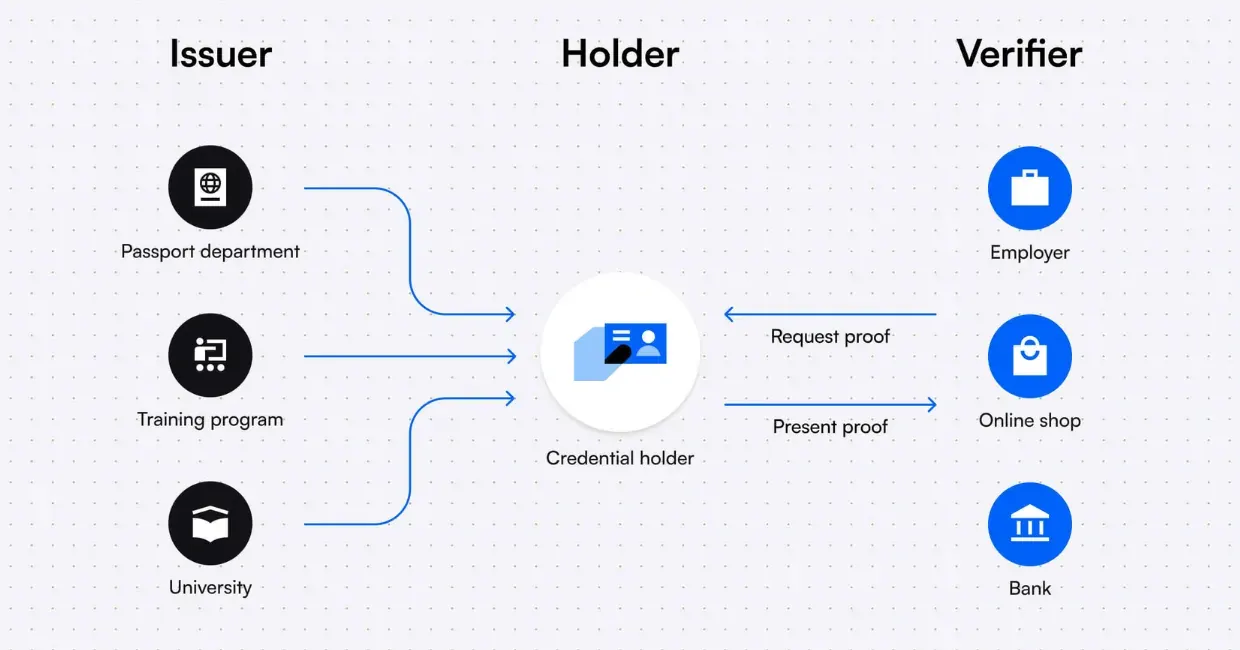
The Vouch platform and Upward Wallet implement this accessible
approach through simplified credential management, where holders keep
full control over their credentials through the issuer-holder-verifier
model, and issuers handle the complexity of credential creation and
verifiers can quickly confirm authenticity.
Perhaps most importantly, centralized digital ID systems offer no
accountability when governments abuse their power, restricting access
arbitrarily or expanding surveillance beyond stated purposes. Uptick’s
decentralized data service is designed to provide transparent tracking
where cryptographic signatures maintain authenticity, recorded
immutably on-chain through auditable processes that replace
institutional promises with mathematical proof, making every action
completely traceable and preventing the invisible abuse that
characterizes centralized surveillance systems.
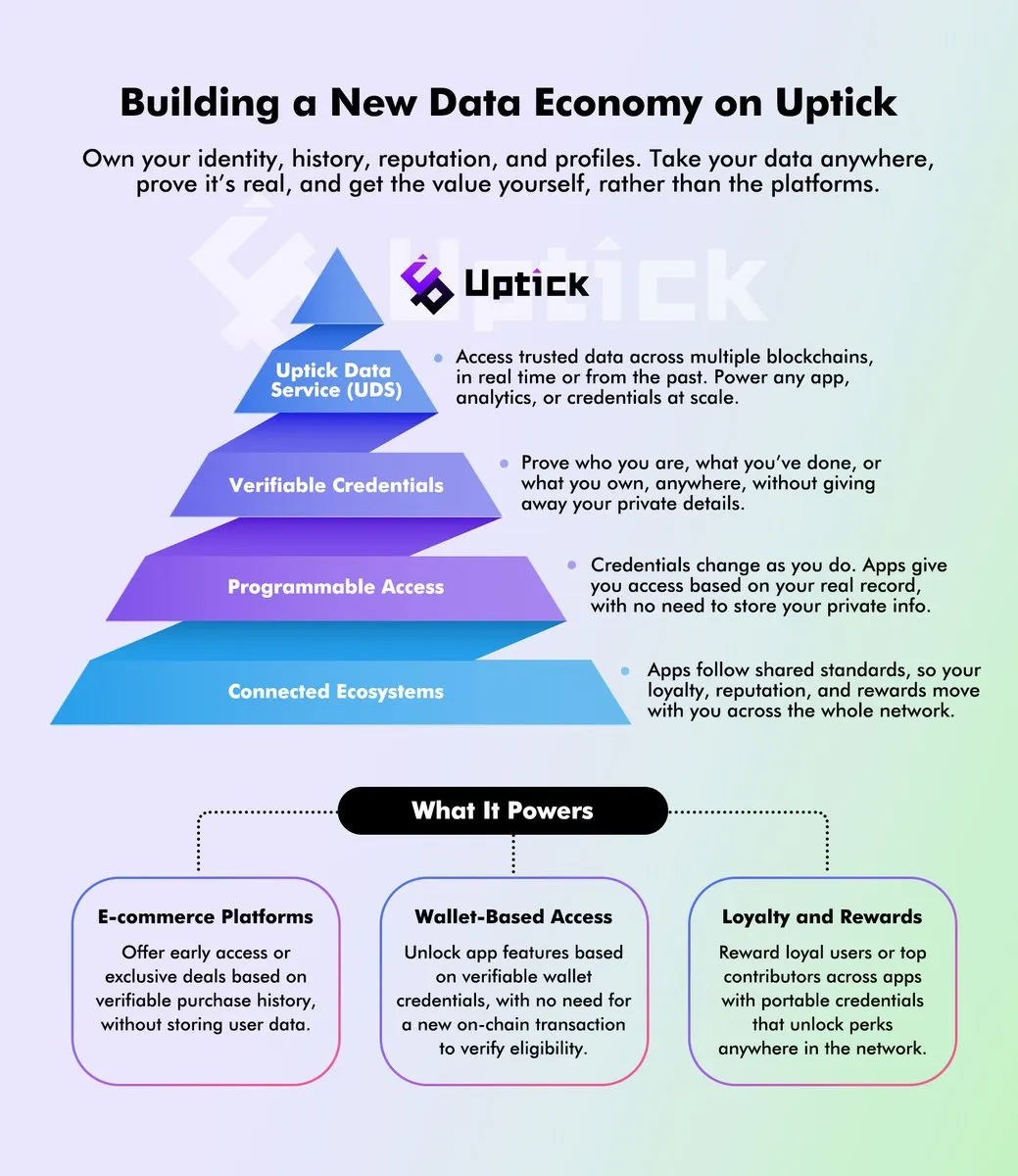
This problem-solution architecture shows us that decentralized
identity through Uptick DID doesn’t simply replicate centralized
systems on blockchain infrastructure, it fundamentally reimagines how
digital identity can work when designed to serve users rather than
surveilling them. Each technical choice addresses specific failures in
centralized approaches, creating verification without surveillance,
autonomy without exclusion, and security without the concentration of
power that inevitably corrupts.

The economic argument for decentralized identity extends far beyond
cost savings, though those advantages are substantial when considering
the full lifecycle costs and economic effects of different approaches
to digital identity management. The UK’s digital ID system will
require massive government investment in infrastructure, ongoing
maintenance costs, and extensive bureaucratic overhead for
administration and support, with these costs burdening taxpayers
regardless of whether they choose to use the system as it creates
economic incentives for surveillance expansion.
Decentralized systems like Uptick DID distribute costs across the
entire ecosystem and eliminate much of the bureaucratic overhead,
allowing peer-to-peer verification through smart contracts that
reduces administrative costs and improves security and privacy through
mathematical rather than institutional guarantees. Despite the fact
that decentralized systems require initial investment in user
education and infrastructure setup, the elimination of ongoing
bureaucratic overhead and centralized maintenance costs creates
long-term economic advantages that compound as network effects reduce
per-user costs.
Use cases like credential verification could be streamlined through
Uptick’s combination of decentralized identity and smart contract
automation, with verifiable credentials enabling users to prove their
identity, qualifications, or attributes without relying on centralized
services, creating efficiency gains that extend beyond direct cost
savings to include reduced friction in economic transactions.
These economic advantages create positive feedback loops that
encourage innovation and adoption, with network effects increasing
value for all participants as more organizations and individuals join
Uptick’s decentralized identity ecosystem and continuing to reduce
costs through improved efficiency and automation. The result is a
virtuous cycle where better technology creates better economics, which
drives broader adoption and further technological improvement, making
decentralized systems increasingly attractive compared to centralized
alternatives that burden users with surveillance costs they never
chose to bear as benefits concentrate among government agencies and
their contractors.

Perhaps the most radical aspect of decentralized identity systems lies
in their governance models, which replace political control with
mathematical certainty and community consensus as they eliminate the
corruption and bias that characterize centralized systems. Uptick’s
implementation includes DAO functionality through its Social DAO
infrastructure that allows communities to establish and maintain
governance standards and community decision-making processes,
providing governance that can adapt to different community needs as it
maintains security and reliability benefits through transparent,
auditable processes recorded immutably on-chain.
DAO governance provides transparency and accountability that is
typically absent from government systems, with all governance
decisions recorded on-chain and auditable by any community member as
it maintains consistent and fair application of identity verification
standards without the potential for political manipulation or
discriminatory treatment that plagues centralized systems. Even though
DAO governance faces coordination challenges inherent to decentralized
decision-making, the transparency and immutability of on-chain
processes provide accountability guarantees that centralized political
systems simply cannot match, creating mathematical rather than
institutional constraints on power.
The decentralized governance model allows innovation and
experimentation in identity verification approaches, letting different
communities test various methods as successful innovations spread
through voluntary adoption rather than top-down mandates imposed by
political authorities. This creates a marketplace of governance models
where, for the most part, the best approaches succeed through merit
rather than political power, preventing the regulatory capture and
bureaucratic ossification that characterize centralized systems as it
allows communities to collectively own and govern their identity
verification systems.
This kind of ownership creates stakeholder alignment that encourages
long-term sustainability rather than the political short-termism that
drives government policy, resulting in governance systems that serve
community needs rather than political ambitions.

The UK’s digital ID scheme forms part of a global trend toward
increased government surveillance and control through digital identity
systems, with similar programs being implemented worldwide as they’re
justified through familiar rhetoric about security, efficiency, and
fraud prevention that obscures their true purpose as population
monitoring infrastructure. This moment will define the evolution of
digital society, determining whether we accept surveillance as the
price of convenience or build alternatives that preserve both security
and freedom through technological innovation rather than political
capitulation.
Decentralized identity through solutions like Uptick DID offers a
pathway for resisting this trend toward digital authoritarianism as it
preserves the legitimate benefits that digital identity can provide,
showing the world that secure, efficient identity verification is
possible without surrendering control to centralized authorities who
inevitably abuse their power. The global nature of the blockchain
means decentralized identity systems can operate across national
boundaries through Uptick’s cross-chain protocols, providing
individuals with identity verification capabilities even when home
governments implement restrictive digital ID schemes as it creates
international interoperability that transcends political control.

As more individuals and organizations adopt Uptick’s decentralized
identity infrastructure, they create pressure for governments to
abandon authoritarian digital ID schemes in favor of
privacy-respecting alternatives, with the economic and efficiency
advantages of decentralized systems providing compelling reasons for
businesses and institutions to support DID adoption even in the face
of government resistance. Though governments may resist through
regulation or mandates favoring centralized systems, the economic and
security advantages create incentives that can overcome political
resistance as businesses and citizens recognize the costs of exclusion
from decentralized ecosystems that operate across jurisdictions.
Essentially, network effects create powerful incentives for adoption
that can overcome political resistance, as the benefits of
participation increase with network size and the costs of exclusion
from decentralized identity ecosystems like Uptick become increasingly
apparent to organizations and individuals alike.

Britain stands where Jeremy Bentham’s England once did, at the
threshold of a new form of social control disguised as progress, with
the government’s digital ID scheme creating comprehensive surveillance
infrastructure that concentrates unprecedented power in centralized
authorities as it creates massive vulnerabilities for citizen privacy
and autonomy. The alternative path leads toward decentralized systems
like Uptick DID that provide verification benefits without
authoritarian implications, using mathematical guarantees rather than
political promises to protect individual freedom as they preserve the
legitimate benefits of digital identity verification.
The technology exists today to build decentralized identity systems
that are more secure, more private, and more efficient than
centralized alternatives, with Uptick’s DID infrastructure
demonstrating that these systems can handle real-world demands as they
preserve individual sovereignty and democratic values through
practical implementation rather than theoretical possibility. The
infrastructure for digital freedom exists as the economic incentives
favor privacy-respecting solutions over surveillance systems, leaving
only the political will to choose decentralized identity over
centralized control before government digital ID schemes become
entrenched and impossible to reverse.

What remains is recognizing that the UK’s experience serves as a
warning about how quickly democratic societies can adopt authoritarian
technologies when citizens accept promises about security and
convenience without examining underlying power structures or
considering alternatives that preserve both safety and freedom. The
future of digital identity depends on choices made today, determining
whether we accept the UK government’s vision of mandatory digital ID
schemes that concentrate power in centralized authorities, or build
decentralized alternatives through platforms like Uptick Network that
preserve individual autonomy and privacy through technological
innovation rather than political submission.
The question isn’t whether we have the technology to make
decentralized identity a reality, it’s whether we have the wisdom and
courage to choose it before the digital panopticon becomes as
inescapable as Bentham’s physical version was intended to be.
In Bentham’s time, the panopticon remained a theoretical construct
that never achieved full implementation, but today’s digital
panopticon faces no such limitations, making our choice both more
urgent and more consequential than any previous generation has faced
in the struggle between freedom and control.