RWA Infra Series | Why Aged Spirits and Fine Wine Need More Than Static Tokens
Published on Jul 15, 2026
Whether it’s a cask of whisky in Speyside, a barrel of Barolo resting in a Piedmont cellar, or a barrel of añejo tequila maturing in oak in Mexico’s designated tequila region, they all have one thing in common.
None of them really sit still.
Every one of these liquids is changing chemically when nobody is watching, although not in the same way. Spirits aging in wood extract color and flavor compounds, lose volume to evaporation, and can change in alcoholic strength, and bottled wine continues developing through slower reactions influenced by its composition, closure, oxygen exposure, and storage conditions. A ten-year cask is also not the same asset it was at year one, and a major part of the economics of aged spirits and fine wine comes from the changes that occur over time, alongside producer, vintage, rarity, condition, and provenance.
That has always been the interesting thing about collectible spirits and wine as assets. Their value comes from time doing something to a physical object in a cellar or warehouse, but the ownership record has traditionally lived somewhere else entirely, in a distillery’s warehouse ledger, a négociant’s cellar book, a broker’s spreadsheet, or a certificate reissued every time the asset changes hands.
A buyer in Hong Kong purchasing a cask of Scotch, a case of Burgundy, or a barrel of aged rum is trusting a chain of documents to describe something they’ll likely never personally inspect as it matures, and that’s a problem.
Cask and cellar ownership as an investment isn’t new. Private buyers and industry participants have acquired and traded Scotch whisky casks for decades, although today’s consumer investment market has expanded mainly in recent years. Bordeaux merchant-futures practices have roots extending back centuries, and the modern annual en primeur campaign took shape much later. Secondary markets for aged spirits and fine wine have also operated for decades through merchants, auction houses, and specialist brokers.
For a long time this worked because the market was small enough for reputation to do the enforcement. Everyone roughly knew everyone, and a bad actor got found out pretty quickly in a community of that size. That changed once collectible drinks investing went mainstream. Rising auction prices for rare bottlings, well-publicized stories about casks and cellars appreciating faster than stock indices, and a wave of new investors with no connection to the wine or spirits trade brought money into the space faster than trust-based systems could vet it.
UK authorities and the advertising regulator have spent recent years dealing with failed cask businesses, unclear ownership arrangements, unregulated investment promotions, and misleading claims about potential returns. Fine wine has its own long history of counterfeit bottles, fraudulent vintage claims, and provenance fabricated well enough to fool experienced collectors at auction. None of this was really about whisky or wine specifically, it was that the only thing standing between a buyer and a fraud was a piece of paper and the seller’s word, and paper is cheap to fake at scale in a way a warehouse full of physical barrels or a cellar of numbered bottles never was.
Tokenization entered the fray promising to close that gap, and aged spirits and fine wine became natural targets because high-value assets were already being held, documented, and traded without most buyers physically inspecting them. The pitch has usually been simple, which is that you fractionalize legally documented rights in the asset, represent those rights on-chain, let someone in another country hold a share of a barrel or case they have never seen, and replace an opaque broker-controlled record with an auditable history of issuance and transfers.
That solves part of the problem, but not the whole one, and the harder question comes after the token is minted.
Many tokenized cask and cellar projects focus on issuing and transferring the digital claim but stop before solving the harder coordination problems around legal title, custody, warehouse recognition, and continuing asset data. The token gets minted once, tied to a lot number and a producer’s name, and from that point behaves like a static certificate that happens to live on-chain instead of a filing cabinet, but a cask a year into maturation and the same cask twelve years in are not interchangeable claims, and neither are a case of young Bordeaux and the same case after fifteen years of proper cellaring.
If the token doesn’t carry that difference forward, the buyer is basically holding a static receipt for an asset that is, by definition, never static.
A maturing cask, an aging bottle of wine, or a barrel of añejo tequila needs a record that can keep up with the asset itself. Volume is lost to evaporation, alcoholic strength changes over time and is measured during gauging, and a cask might move between warehouses, be re-racked into a different type of wood for finishing, or be partially drawn down for a limited bottling. A wine could also move between cellars, be recorked, rebottled, inspected, or withdrawn from sale because the provenance record no longer holds up.
If the token only records the original holder and documented rights on the day of issuance, it misses the very thing that creates or destroys value over time.
Uptick infrastructure is designed to give that changing asset a way to keep its record alive. The metadata attached to an asset doesn’t have to be treated as a one-time description written at mint and then frozen forever. Uptick allows asset metadata to be updated as the asset changes and supports lifecycle tracking. In a cask or cellar deployment, the issuer could define which warehouse, producer, merchant, or appraiser accounts are authorized to submit particular updates, allowing those events to be connected directly to the tokenized asset rather than maintained in an entirely separate record.
The update then becomes part of the asset’s own record, made by the party recognized as allowed to make it.
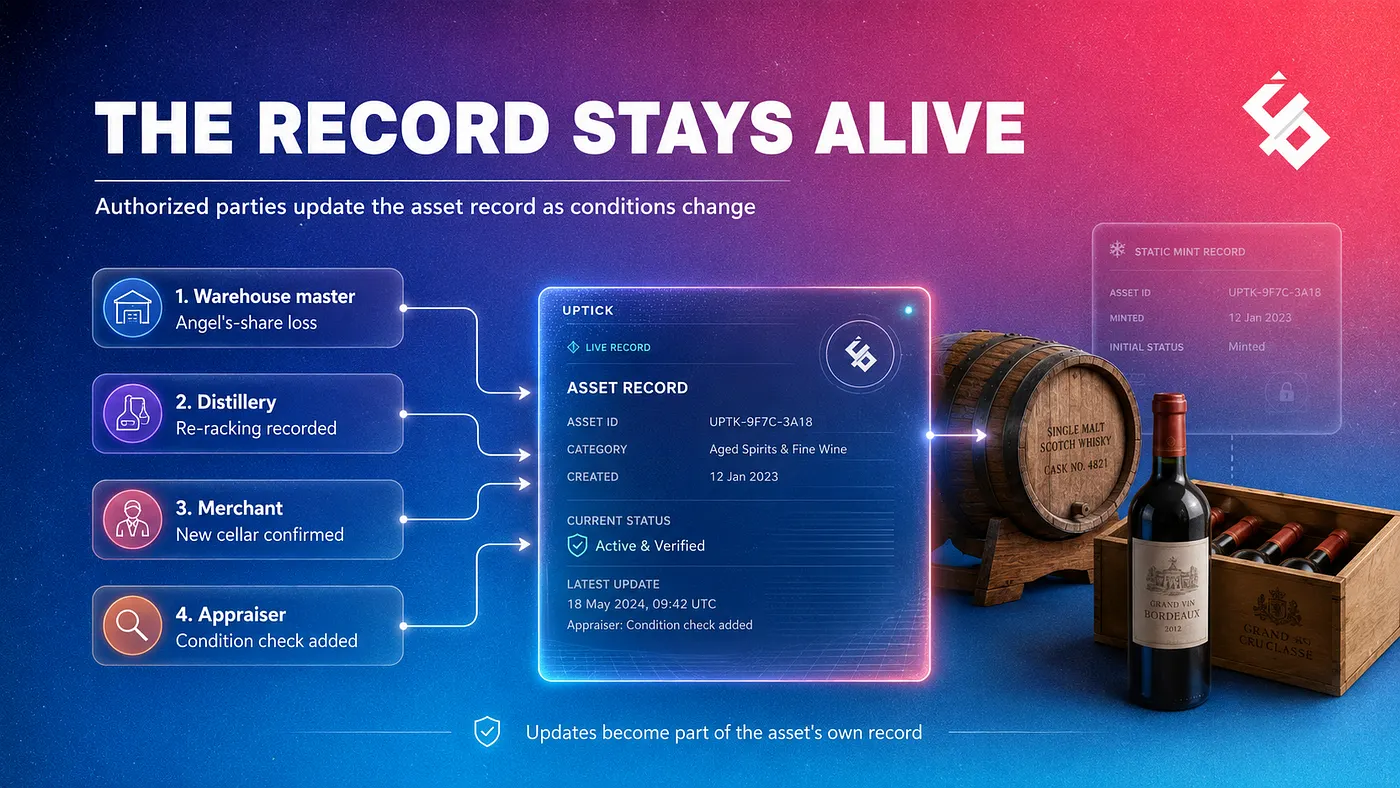
Cask ownership already depends on a record that the buyer can’t physically check every week, and a buyer needs to know whether the cask is still in the approved warehouse, whether the volume and strength have changed, whether the cask was moved, whether it was insured, whether the warehousekeeper still recognizes the ownership claim, and whether the asset being sold today is still the same asset originally described. Uptick doesn’t make the whisky mature better, and it doesn’t replace the warehouse, but it gives those real-world changes somewhere to be written so the token doesn’t keep pretending nothing has happened.
For a buyer, that changes the entire shape of the claim. A five-year hold on a static token means five years of drift between what the certificate said at the start and what is actually sitting in the barrel or cellar today. A long-term hold on a token that updates at each recognized event means the buyer two years in, five years in, or ten years in isn’t relying on the original snapshot. They could instead be looking at an evolving record built from updates submitted by the producer, warehouse, merchant, or other authorized parties as the asset matures.
Collecting aged spirits and fine wine has always run on history as much as liquid. A cask from a closed distillery, a bottling tied to a warehouse fire that destroyed half the stock, or a case of Burgundy from a legendary vintage that changed hands three times before landing in a collector’s cellar can all carry value beyond the liquid itself. The wine trade has been repeatedly burned by this, with counterfeit rare bottles good enough to fool experienced auction house specialists, showing how much value in this category depends on documentation most buyers can’t independently check.
A token that only identifies the current holder of the tokenized claim misses most of what a collector is actually buying. The useful record is the one that carries the asset’s full history forward, whether that’s which producer made it, which cellar or warehouse held it, whether it moved between facilities, whether it was re-racked, recorked, inspected, bottled, split, or transferred, or who actually verified each event.
Uptick’s lifecycle tracking can give those events somewhere to live with the asset, so a buyer three holders removed from the original release would not have to rely only on the version of events told by the latest seller. They could read the record built from authorized updates each time the asset changed hands or changed condition.
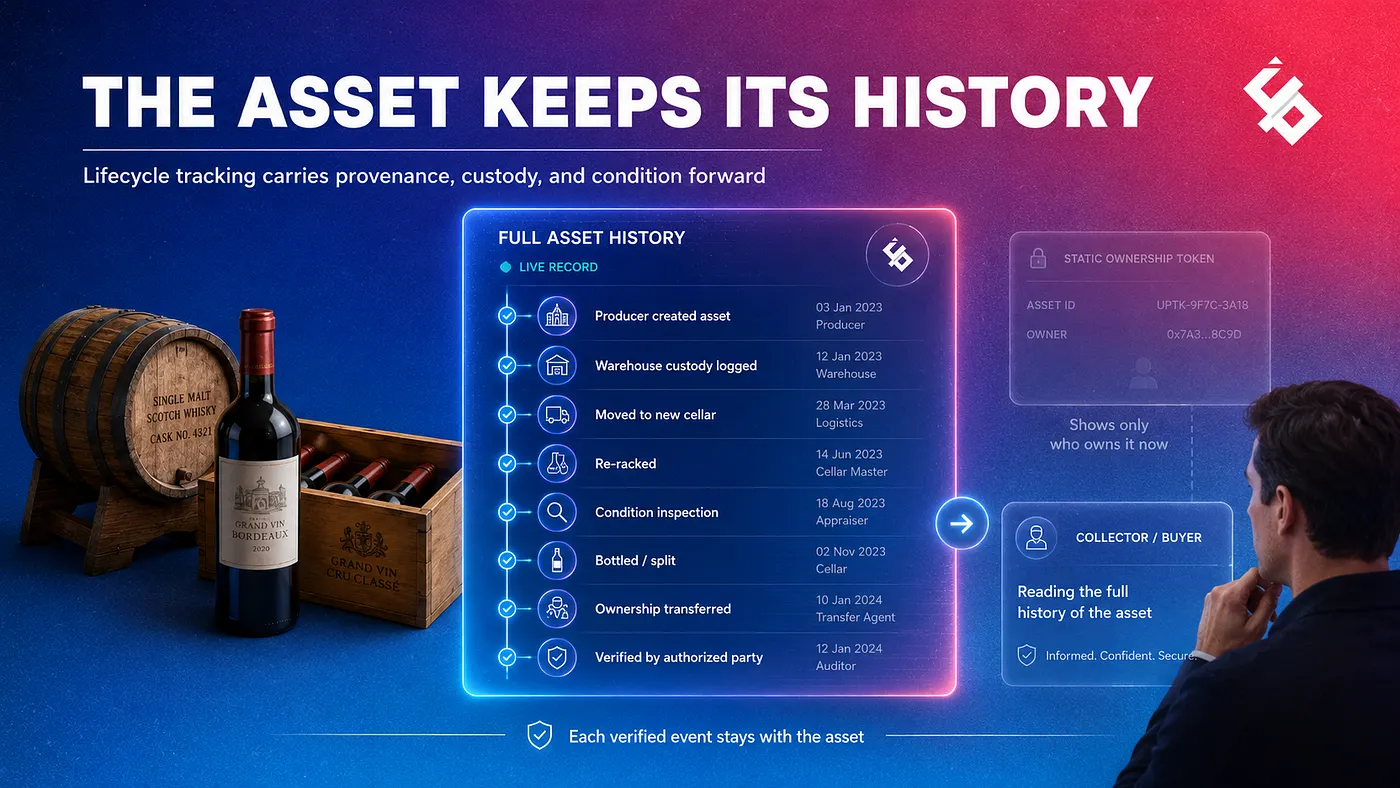
That difference becomes obvious in rare spirits and fine wine because provenance isn’t a small thing of note, it’s actually part of the product. Two bottles could look identical, but if one has a clean chain of custody and the other has gaps, the market treats them completely differently. The same should be true for tokenized ownership, so a token shouldn’t merely identify who holds the tokenized claim today, it should help show why the asset deserves to be trusted today.
Part of what makes aged spirits and wine harder to track than most RWAs is that the thing being tracked keeps changing form. A cask might get re-racked from an ex-bourbon barrel into a sherry butt for finishing, changing its flavor profile and value. A mature wine might be inspected or recorked under controlled conditions and, in rarer cases involving particular wines, rebottled. Collectors track such interventions carefully because poor execution or documentation can damage auction value even if the wine stays sound. A cask or barrel might get partially bottled, with the producer drawing off a portion for a limited release as the rest keeps aging, or blended entirely into a different product, disappearing as a distinct unit and reappearing as a fraction of something else.
Some of these events, including re-racking, finishing, blending, and partial bottling, are normal parts of cask management. Others, such as intervening in a mature bottle of wine, are less common but can have an outsized effect on provenance and value. A static token can’t represent that without either freezing the asset’s actual life to match the certificate, which nobody wants, or letting the certificate slowly stop meaning anything, which is worse.
The issuance terms and supporting smart contracts can define what happens to a fractional claim when the physical asset changes, including how holders are treated after a partial draw-down or other material event. Holder voting, automatic proportional adjustments, and approval rights over physical operations would require additional legal and contract design beyond the standard transfer-compliance rules. The event that changes the physical asset should also update what the token represents, otherwise the token is describing an asset that technically stopped existing in that form months earlier.
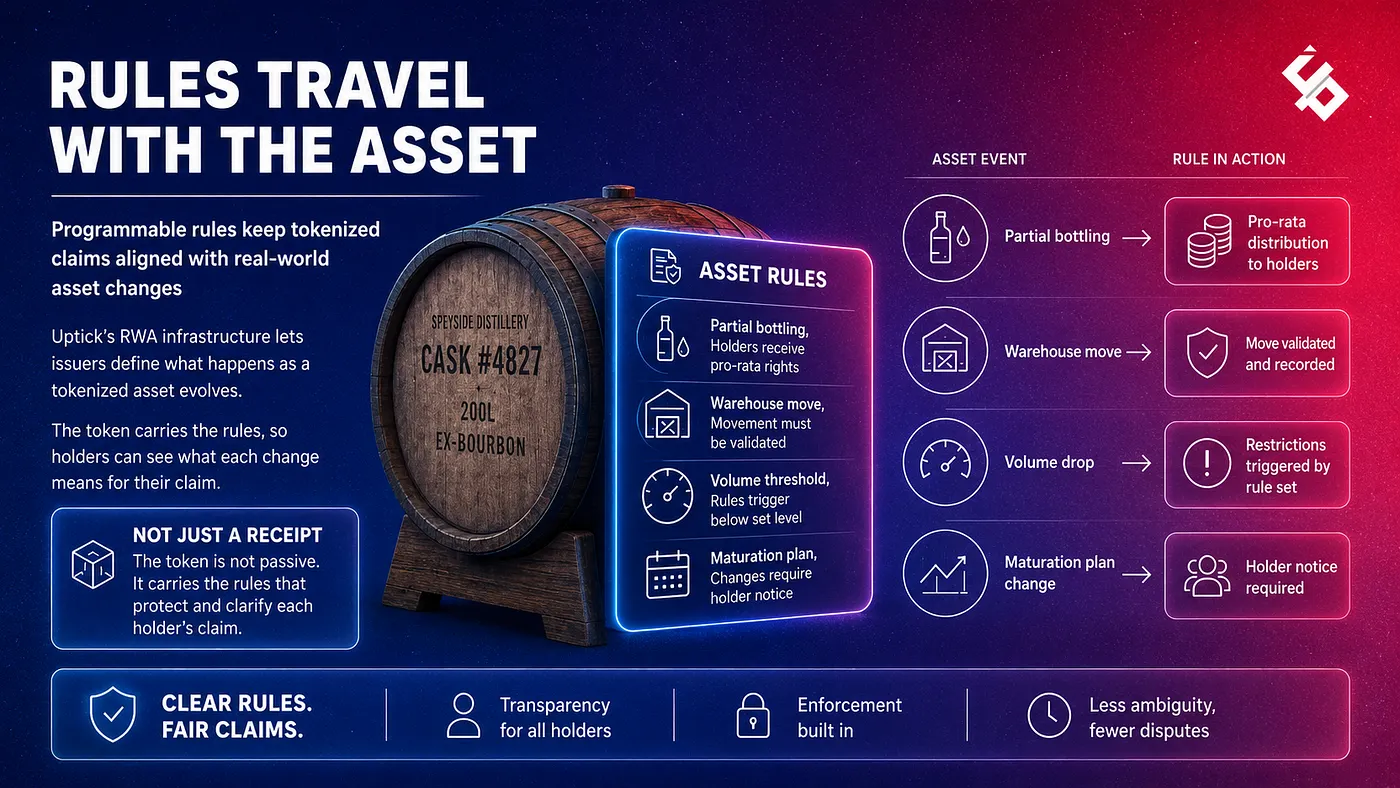
Uptick’s metadata, lifecycle, and compliance tools provide a foundation for this kind of asset complexity. A cask-specific implementation could add issuance terms and custom logic covering partial bottling, volume thresholds, warehouse movements, and changes to the maturation plan. The token doesn’t need to be a passive receipt sitting behind the real decisions, it can carry the rules that tell holders what those decisions mean for their claim.
Get Uptick Network’s stories in your inbox
Join Medium for free to get updates from this writer.
Remember me for faster sign in
A simple example would be if a producer draws down part of a cask for a limited bottling, the token shouldn’t keep representing the original full cask as if nothing changed. The holders need to know whether their claim now applies to the remaining liquid, to the bottled release, to a proportional share of proceeds, or to some combination of those things. If those rules are attached from the start, the change in the physical asset doesn’t become a private negotiation after the fact. Once verified and submitted, it becomes an event the tokenized record can reflect.
The physical asset is not the only thing moving, because ownership can change several times before a cask is bottled or a case of wine reaches its final collector. A distillery in Scotland, a négociant in Burgundy, or a tequila producer in Jalisco selling fractional ownership to buyers in Tokyo, Singapore, and New York runs into a trust problem that has nothing to do with the liquid itself.
The producer doesn’t know these buyers, has no way to independently confirm who is actually behind a wallet address, and still has to be confident the person receiving a share of a maturing asset is who they say they are. That problem is exacerbated once secondary trading starts and the original buyer sells to someone the producer has never heard of.
Uptick’s compliance layer integrates standards such as ERC-3643, helping issuers keep eligibility and transfer rules attached to the token after the first sale. The token can be configured to move only to wallets whose identities and credentials satisfy the issuer’s current requirements, including during later resales, but the issuer is still responsible for selecting trusted verification providers and defining the appropriate legal and compliance checks.
The important shift is that compliance no longer has to be treated as a one-time check completed when the token is first issued. Each proposed secondary transfer can be tested against the same identity and eligibility framework, so the issuer doesn’t have to rebuild the entire approval process every time the claim moves to a new buyer or venue. That gives the secondary market room to operate without allowing the tokenized claim to drift outside the legal and custodial structure that supports it.
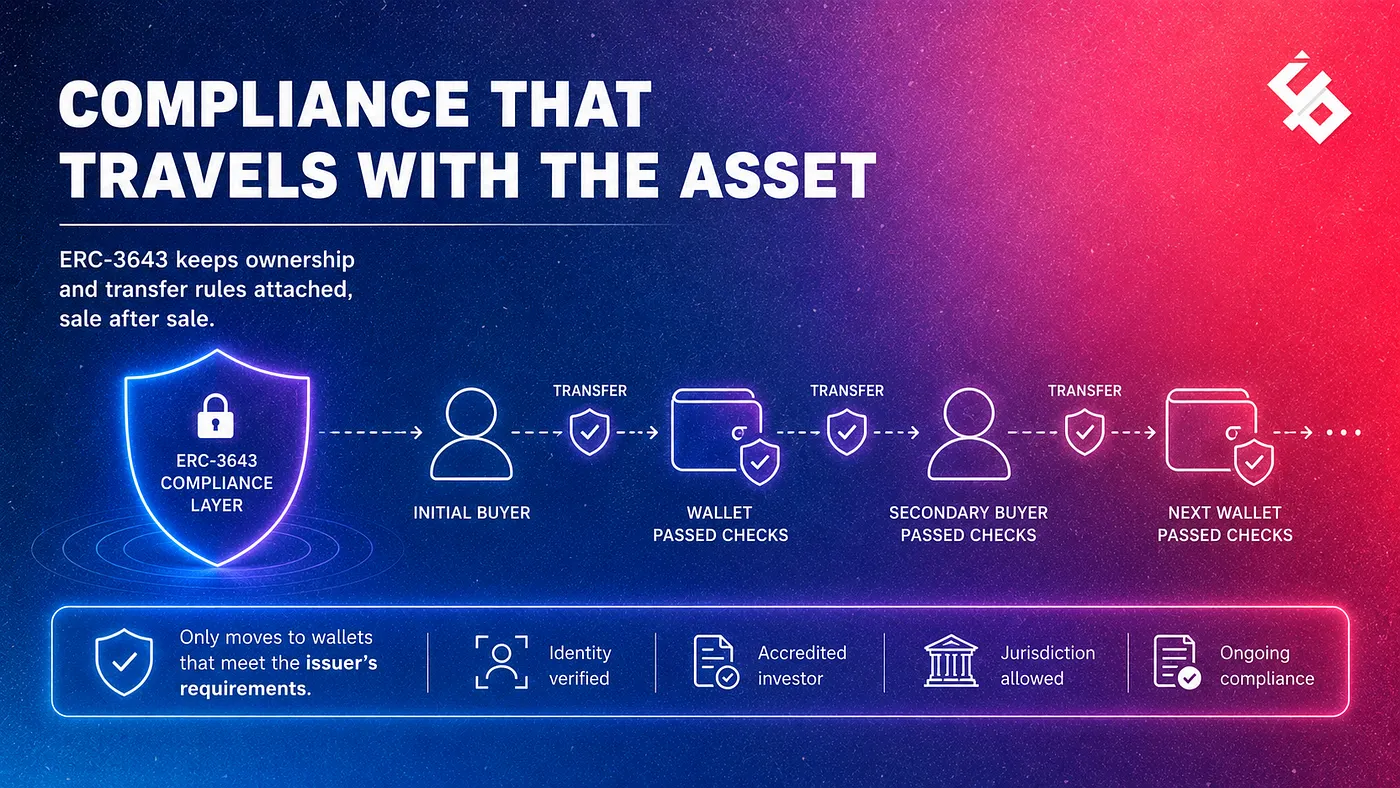
A fractional cask or cellar position can create restrictions that normal collectibles don’t have. The issuer might need to limit buyers by jurisdiction, apply holding rules, stop transfers into wallets that haven’t completed verification, or make sure ownership stays inside a structure the warehouse, custodian, or legal agreement can actually recognize. If the token trades freely without those checks, the issuer is back to the old problem, where the asset moves faster than the people responsible for it can verify.
That is most useful in exactly the secondary-market trades where the old trust-based system becomes fragile. A collector in Singapore sells a share of a cask to a buyer in New York, or a wine investor in Tokyo sells part of a cellar position to someone the merchant has never met. Without rules attached to the asset, the issuer basically has to hope the market behaves properly after the first sale.
With transfer rules built into the token, the tokenized claim carries the issuer’s requirements into each future on-chain transfer.
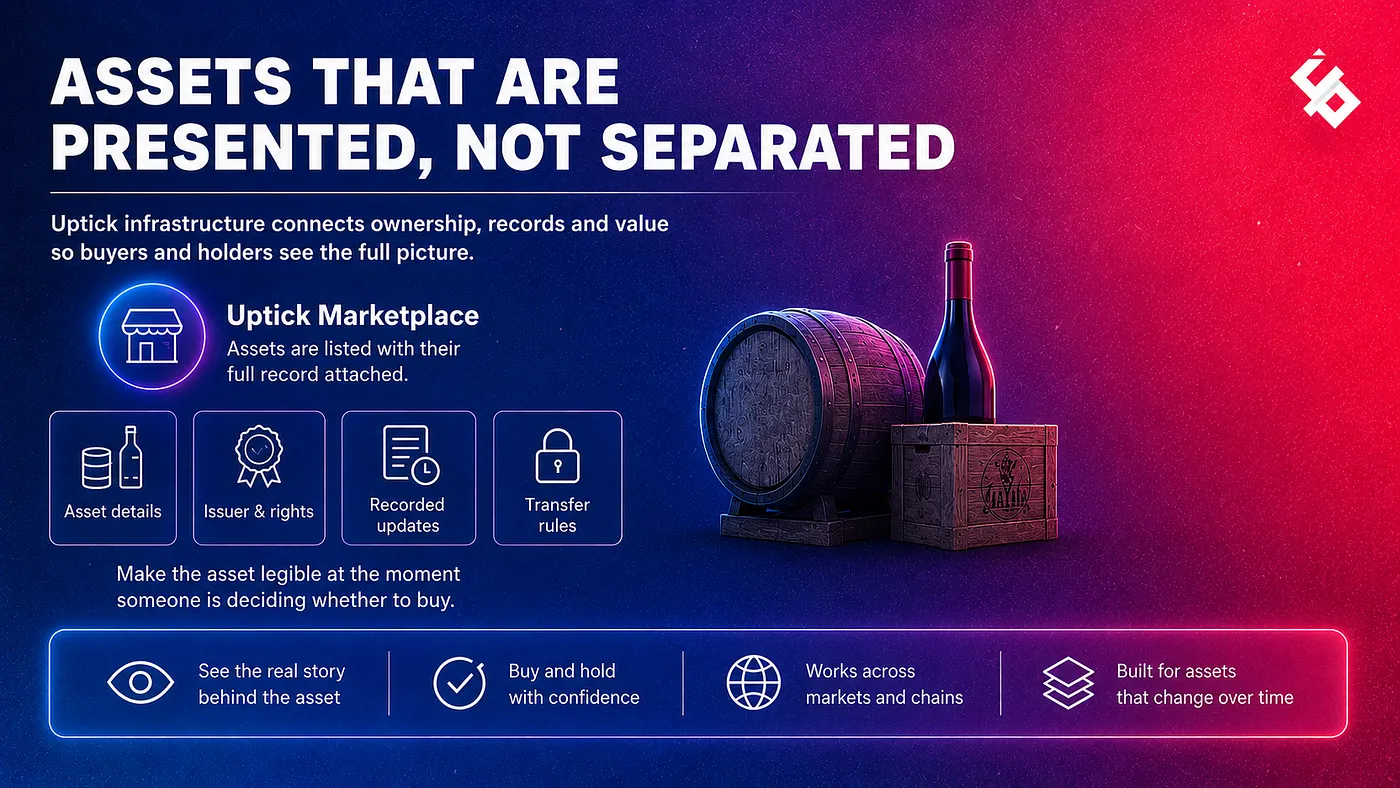
A tokenized cask or cellar position needs somewhere to be presented and exchanged without becoming detached from the record around it. A spreadsheet can record a buyer, a broker can record a transfer, and a warehouse can record custody, but the difficulty comes when those records have to describe the same asset across several years, several owners, and several systems.
Uptick Marketplace gives these kinds of assets a place to be presented and exchanged rather than leaving them as a bare token without a usable market interface. For a cask or cellar implementation, the listing could expose what the asset is, who issued it, what rights are being transferred, which updates have been recorded, and what restrictions apply to future movement.
The value of that interface is not simply that the token can be listed for sale. In a conventional cask or wine transaction, the asking price, ownership documents, latest warehouse information, provenance record, and transfer conditions can all arrive through different channels. Bringing them into the same transaction surface means a buyer can evaluate the claim and the evidence supporting it together, rather than agreeing on a price first and discovering gaps or restrictions later. It also makes different positions easier to compare on more than the producer, vintage, or headline age.
That continuity has to extend beyond one marketplace. A cask or cellar position might remain outstanding for ten or twenty years, during which the applications, venues, and networks around it could change several times. Uptick’s interoperability standards can help the tokenized claim remain usable across connected environments instead of depending permanently on the application through which it was first issued. The objective is not to create several competing versions of the asset, but to let market access and application use expand while a canonical identity and synchronized record preserve one continuing history.
Assets with long lives also need a way to stop moving when something goes wrong. Casks or cellar lots can be placed on hold or withdrawn, vintage and provenance claims can be disputed, and bottles occasionally turn out to have problems discovered only after they have changed hands several times. Regulatory holds happen, ownership disputes happen, and sometimes a producer needs to freeze a specific lot because of a contamination question or a legal claim on the underlying stock.
A static token without administrative or compliance controls has no built-in answer for this and may continue circulating regardless of what is happening to the physical asset it represents.
Recoverable tokens give the digital claim a way to respond when the physical asset is no longer cleanly tradable. Uptick’s RWA infrastructure supports freezing, transferring, or recovering a token when a court order or compliance issue requires it, so the digital claim doesn’t keep circulating as if nothing has changed. If a cask is caught up in a legal dispute, a cellar lot is placed under regulatory hold, or a barrel’s provenance is challenged, the token could be frozen or reassigned where legally permitted so that the digital claim reflects the status of the underlying asset.
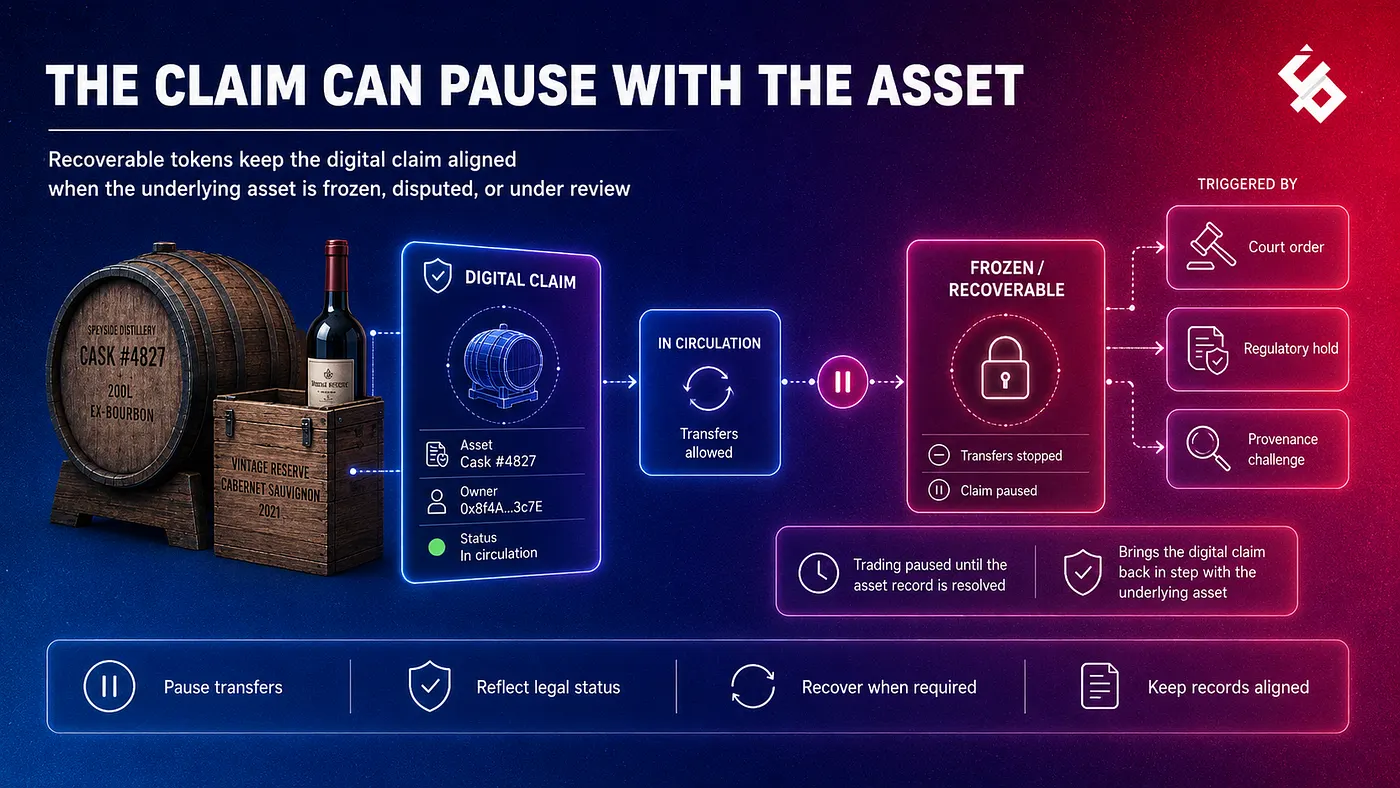
This is the same requirement any serious physical asset registry has always had. If the thing being represented is recalled, disputed, frozen, or legally restricted, the record representing it has to be able to reflect that, otherwise the token continues trading the appearance of certainty after the certainty has gone.
There is a practical reason this matters more for aged assets than it might for something simpler. A whisky cask or fine wine position can change hands long before the underlying asset is consumed, bottled, redeemed, or sold. If a dispute appears halfway through that life, the token can’t behave as if final settlement has already happened. The issuer needs a way to pause token transfers, correct the record, recover or reassign the tokenized claim if legally required, and show that the interruption itself became part of the history.
Without that, tokenization only makes the bad claim easier to circulate.
None of this changes what these assets actually are.
A cask still needs years in controlled storage, sometimes decades, and wine still needs suitable cellaring and time. The asset also depends on continuing custody and competent physical management, even if the original producer later closes, and no metadata update replaces the people responsible for assessing and handling the liquid itself.
Tokenizing the documented ownership rights doesn’t tokenize the aging process, and it shouldn’t try to.
What Uptick contributes is continuity across the full life of the claim. The identity and rights framework used at issuance can stay connected to later asset updates, secondary transfers, market access, cross-network use, and intervention when something goes wrong. Each stage can therefore work from the same underlying claim rather than producing another disconnected record that has to be reconciled and trusted from the beginning.
When those layers remain connected, the tokenized claim can continue to reflect what the asset is, who is eligible to hold it, what’s happened to it, and how exceptional events are handled. Its reliability still depends on recognized custody, inspection, legal documentation, and trustworthy data inputs, but the digital record has a much better chance of keeping itself aligned with the underlying asset ten or twenty years after issuance.
Whether it’s a cask of scotch, a case of burgundy, or a barrel of añejo tequila, the point of buying an aging asset is trusting that something good is happening to it when you are not there to check.
A reliable record, backed by recognized title, physical custody, inspection, and enforceable rights, is what keeps that trust from becoming a guess.
Uptick Network is pioneering Web3 infrastructure and ecosystems for the real economy, redefining how value is created on the internet.
Our infrastructure features a Layer 1 public chain built on Cosmos SDK with EVM and WASM extensions, seamlessly interoperable with all EVM and IBC-powered ecosystems. This enables a diverse array of innovative applications that capitalize on the unique attributes of NFTs and more.
Uptick Network comprises three essential components: Web3 Infrastructure, Web3 Marketplace, and Web3 Ecosystem Applications.
Empower your digital assets via the marketplace on web or with the flagship Uptick Marketplace mobile app for seamless operations on the go, and manage your assets and make payments in the ecosystem with the flagship Upward Wallet.
Learn more about Uptick Network
Website | Telegram | Discord | Medium | X | Contact