Uptick Insight Series | 6 Ways RWA 2.0 Is Different From Everything
That Came Before
Published on Mar 17, 2026
When Blockchain Capital published its first serious analysis of RWA
tokenization in 2019, the framing was almost entirely about
representation, about taking a bond or a property deed and creating a
digital token that proved ownership on-chain, settling faster, moving
more freely, and essentially, costing less to administer than the
paper-based systems it replaced.
That framing captured something real but actually missed something
larger, because the conversation was almost entirely surrounding what
the token represented rather than what it could do, treating
tokenization as a more sophisticated cabinet for ownership records
rather than as programmable infrastructure capable of reshaping how
assets generate value, reach investors, and respond to the communities
that own them.
It’s been a long ride…
The market spent six years and billions of dollars in that first
phase, and the results were instructive. A 2025 arXiv study examining
more than $25 billion in on-chain tokenized assets found that most of
them exhibited low trading volumes, long holding periods, and minimal
secondary market activity, which is the financial equivalent of
building a motorway that nobody bothers to drive on.
The RWA market is now moving through a completely different phase, one
the industry is starting to call RWA 2.0, shifting from conceptual
exploration to the harder work of building infrastructure that
actually functions. With this shift, it’s exposing a clear dividing
line between platforms that tokenized assets and platforms that built
the complete infrastructure stack needed to make those assets function
as genuine financial instruments in the real economy.
The problem was never the tokenization layer, it was that every other
layer of infrastructure needed to make a tokenized asset business
actually work, the rights confirmation, the on-chain valuation, the
profit sharing, the trading infrastructure, the risk disclosure, was
either missing entirely or rebuilt from scratch by each issuer at
enormous cost and inconsistent quality, creating a market full of
tokens that technically existed but practically underdelivered on
almost every dimension that mattered to the businesses and investors
they were supposed to help.
RWA 2.0 is the recognition that a token without the complete
surrounding infrastructure is not a financial product, it is simply a
proof of concept, and that building the standardized, scalable
infrastructure stack connecting the real economy to on-chain finance
is the actual work this market has been building toward since the
first bond settled on-chain back in 2020.
In this article, we’re going to explore six ways that distinction is
changing everything.
Let’s get into it.
The defining limitation of first-gen tokenized assets was that they
were structurally isolated, meaning that the token existed on-chain
but the entire system around it (valuation, income distribution,
performance reporting, risk disclosure, etc), stayed off-chain,
managed by the same fund administrators and intermediaries who managed
it before tokenization existed, operating on their schedules and
according to their incentives.
Income distribution required manual calculation, and valuation updates
arrived quarterly in PDF reports prepared by third parties whose
incentives weren’t necessarily aligned with accuracy over
presentation. Risk disclosure was whatever the issuer chose to include
in a document that investors received once rather than a live data
feed they could query at any time, and the token itself had zero
awareness of how the underlying asset was actually performing at any
given moment.
BlackRock’s BUIDL fund and MakerDAO’s RWA collateral positions are the
two most cited examples of Web3 financial products in the current
market, and both confirm the same pattern. Despite their on-chain
presence, both maintain relatively static liquidity profiles, are held
for yield rather than actively traded, and continue to depend on
off-chain systems for the operational logic that actually governs
investor experience.
This tells us that the tokenization layer works, but everything around
it still runs the old way.
RWA 2.0 treats the token not as the product but as the entry point
into a complete on-chain system covering rights confirmation,
continuous valuation, automated profit sharing, active trading
infrastructure, and transparent risk disclosure, all of which need to
work together as an integrated stack rather than as separate pieces
assembled differently by every issuer who comes to market.
The practical significance of standardization here is easy to
underestimate. When every RWA issuance requires a custom technical
build to connect the asset’s economic logic to its on-chain
representation, the market stays limited to well-capitalized
institutional issuers who can afford that build, and the vast majority
of real-world assets that could benefit from tokenization never make
it to market because the barrier is too high. Standardized contract
templates and data specifications that lower the threshold for
physical assets to enter Web3 are what transform tokenization from an
institutional experiment into a scalable market.
Uptick’s Programmable NFT Protocol and DeFi Protocol provide the
foundation for this core financial logic, because programmable NFTs
are able to carry dynamic metadata that updates continuously as asset
conditions change, smart contracts embedded in the token execute
income distribution automatically when predefined conditions are met,
and the ability to connect to a DeFi Protocol’s NFT collateralization
and leasing standards let these same assets participate in broader
financial markets rather than sitting idle between income events.
The asset stops simply representing ownership, and actively manages
the economic relationship between the underlying business and every
investor who holds a stake, with the full valuation, profit-sharing,
and risk disclosure stack operating on-chain rather than through
intermediaries who charge for doing it slowly and selectively.
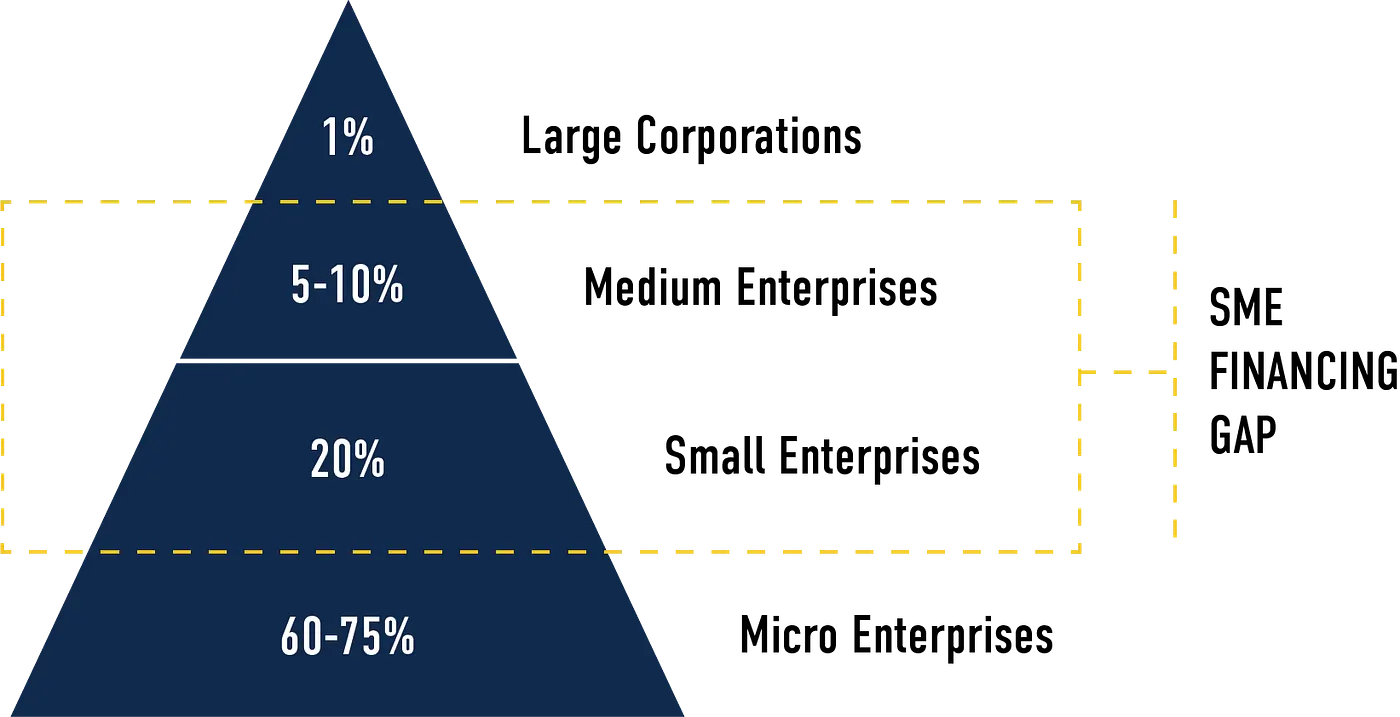
Small and medium-sized businesses collectively represent the backbone
of most economies, but access to working capital financing for SMEs
remains one of the most persistent failures in global finance, with
the Asian Development Bank estimating a $2.5 trillion annual trade
finance gap affecting primarily smaller businesses whose assets are
real but whose data is too broken and difficult to verify for
traditional lenders to comfortably extend credit.
The problem isn’t that these businesses lack genuine assets, a
manufacturer with confirmed purchase orders from creditworthy buyers
has a real claim on future cash flows, a trading company with
warehouse receipts for physical inventory holds an asset with
verifiable value, and an agricultural producer with forward contracts
for the coming harvest has documented revenue that any rational lender
should advance against.
Platforms like Maple Finance, Centrifuge, and Goldfinch have show us
that appetite for tokenized SME credit is genuine, with active
on-chain private credit exceeding $18 billion by late 2025, but the
businesses accessing that capital have mostly been those with
sophisticated enough legal and technical teams to navigate the custom
build required to get their assets on-chain in the first place. The
SME in Southeast Asia with real warehouse receipts and no blockchain
development budget is still locked out, not because global investors
wouldn't fund them, but because nobody built the infrastructure to
make the connection simple enough to use.
Tokenization changes the verification equation entirely when it's
built on the right infrastructure. When an SME’s trade assets are
tokenized on-chain with their authenticity, performance status, and
fund flows made continuously verifiable through Uptick’s planned
Oracle feeds, the verification burden that previously required
expensive manual due diligence gets replaced by transparent data that
any investor can query directly, and the geographic barriers that
limited financing to whoever was physically close enough to verify the
assets collapse because on-chain verification works the same whether
the investor is local or on the other side of the world.
Uptick’s infrastructure supports deployment across public blockchains
and compliant ecosystems via its modular architecture, with the Uptick
Cross-chain Bridge (UCB) handling interoperability between them, which
means an SME asset could, in theory, eventually meet the compliance
requirements of its home jurisdiction and still remain accessible to
global investors operating across different blockchain ecosystems,
rather than forcing issuers to choose between regulatory compliance
and investor reach.
Uptick's Decentralized Data Service addresses the verification layer
by storing asset performance data with cryptographic permissioning, so
the manufacturer's purchase order status, the trading company's
warehouse receipts, and the agricultural producer's forward contracts
are all continuously verifiable by any investor who needs to assess
them, without exposing sensitive business information to parties who
don't have a legitimate need for it.
Combined with the Omnichannel Payment Module supporting multiple
currencies and stablecoins, an SME in Southeast Asia might access
financing from a capital pool spanning multiple ecosystems
simultaneously, receiving working capital at competitive rates from a
global investor base that previously had no practical way to reach
them.
This is what it means for RWA to serve the real economy rather than
financial speculation, because the capital flows to businesses that
need it to operate and grow rather than to instruments that exist
primarily to give sophisticated investors another vehicle for yield
optimization.
Every serious discussion of RWA market growth eventually arrives at
the same bottleneck, which is that secondary market trading in
tokenized assets is suppressed not by lack of investor interest but by
compliance friction that makes transferring tokens between investors
more operationally complex than it should be.
The arXiv study confirmed this directly, noting that participation in
most tokenized RWAs is restricted to whitelisted KYC-compliant
addresses, and that this whitelisting requirement is one of the
primary structural barriers keeping secondary markets thin regardless
of how much underlying investor demand exists.
The traditional approach treats compliance as a gateway, a wall that
investors pass through during onboarding and again whenever a transfer
involves a new counterparty, with human compliance teams reviewing
documentation and administrators maintaining whitelists that determine
which wallets are permitted to hold which assets. This works tolerably
for primary issuance where the investor set is small and transactions
are infrequent, and it breaks down almost completely for secondary
markets where the value proposition depends on investors being able to
transact freely as conditions change.
The architectural fix is embedding compliance into the token itself
rather than layering it on top as a separate manual process, so that
transfer rules, investor eligibility requirements, and jurisdictional
restrictions become part of the asset’s smart contract logic that
executes automatically rather than triggers a human workflow that
takes days and costs money every time it runs.
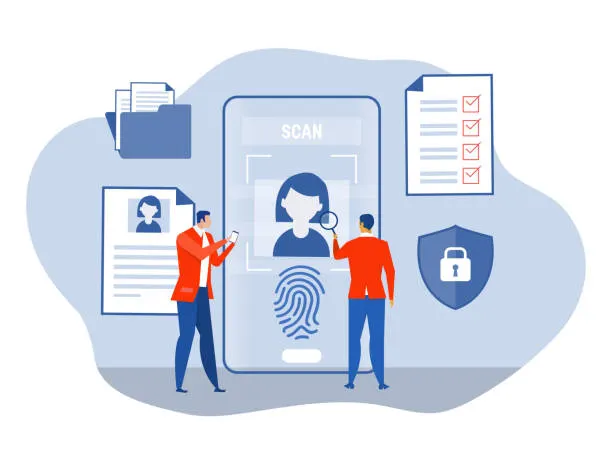
Uptick DID makes this practical by allowing investors to carry
verifiable credentials built on W3C standards that prove their
compliance status and jurisdictional eligibility through selective
disclosure, meaning an investor can demonstrate everything a transfer
requires without exposing their full identity to every counterparty.
When those credentials are cryptographically linked to the
Programmable NFT Protocol’s access control mechanisms, transfers
complete automatically when both parties carry valid credentials and
are blocked automatically when they don’t, creating a compliance layer
that runs at the speed of code.
Secondary market activity then stops being a compliance problem and
starts being a business advantage.
The single most underappreciated structural problem in the current RWA
market is chain fragmentation, where an asset tokenized on Ethereum
can only be owned by Ethereum investors, leaving out every dollar
sitting in Cosmos-based DeFi protocols, Binance Smart Chain
ecosystems, and Polygon liquidity pools that might otherwise find the
asset attractive.
The consequences are measurable, as research tracking tokenized RWA
markets in 2025 documented 1 to 3% pricing gaps for identical assets
held across different chains, and 2 to 5% friction costs when moving
capital cross-chain, meaning that chain fragmentation isn’t just an
inconvenience, it is actively destroying value for both issuers and
investors who have no mechanism to close the gap without expensive
manual bridging that often introduces new compliance complications on
the other side.
For an issuer, this means the size of your investor base is determined
not by who finds your asset attractive but by which chain you happened
to build on, and there is no market logic that justifies that
constraint.
A real estate fund issuing tokens on Ethereum in 2021 and a private
credit vehicle issuing on a Cosmos chain in 2023 are both tokenized
assets serving investors who might rationally want exposure to both,
but those investors are currently forced to manage separate wallets,
separate on-ramps, and separate compliance processes for each
ecosystem, which is friction that suppresses participation and keeps
secondary markets thinner than the underlying investor demand would
support if the infrastructure got out of the way.
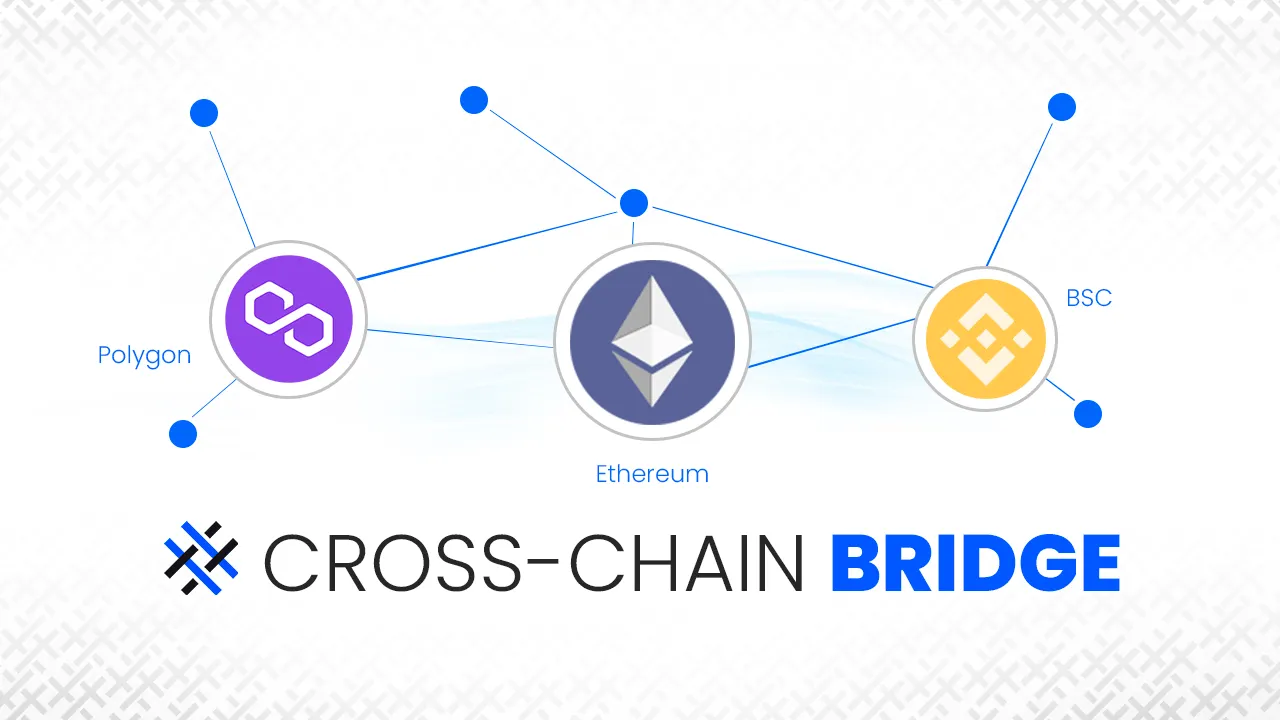
Uptick’s Cross-chain Bridge (UCB) and IBC protocols resolve this at
the infrastructure level, enabling tokenized assets to move freely
across Ethereum, Cosmos, Binance Smart Chain, and Polygon ecosystems
(and more), through the same underlying architecture rather than
requiring each issuer to negotiate their own bridging arrangements
with every ecosystem they want to reach.
For an RWA business, the secondary market for their asset becomes as
large as the combined investor base across all those ecosystems rather
than one slice of one chain, and the UCB’s use of zk-SNARK
verification for off-chain computation means cross-chain transfers
stay cost-efficient even at the transaction volumes that genuine
secondary market liquidity requires.
One of the most consistent failures in first-generation RWA platforms
was treating token issuance as the conclusion of the business process
rather than the beginning of an ongoing relationship, leaving issuers
with essentially no tools for engaging token holders after capital was
raised, no mechanism for rewarding long-term commitment, and no
structured way to build the kind of community around an asset that
turns investors into advocates who bring in additional capital over
time.
An analysis of common RWA business failures identified the top three
operational mistakes as launching without a clear liquidity plan,
ignoring KYC and AML obligations, and underestimating the need for
investor communication during downturns, and noted that each of these
kills momentum faster than any technical failure. The third one is
pretty telling, because it’s not a technical problem, it’s a
relationship problem, and the platforms that experienced it the
hardest were the ones that had no infrastructure for maintaining
investor relationships beyond the quarterly report and the occasional
email when something went wrong.
A token holder who bought into a real estate fund during a
distribution drought has no visibility into what management is doing
about it, no channel to ask, and no reason to hold rather than exit at
a loss, and the platform has no way to know any of that is happening
until the redemption request arrives.

Uptick’s Decentralized CRM stores investor interaction data across its
decentralized infrastructure, using IPFS for off-chain storage with
cryptographic access controls and on-chain records to keep
immutability and transparency, giving RWA businesses the ability to
see when engagement is dropping and respond through automated smart
contract logic before a disengaged holder becomes a redemption
request, rather than discovering the problem only after it has already
happened.
A fund might want to automatically unlock enhanced reporting access
for investors who have held tokens through multiple distribution
cycles, issue governance weight proportional to holding duration, or
distribute bonus yield allocations to token holders who participate
actively in governance votes, all running automatically through
programmable logic without operational overhead.
The Decentralized CRM extends this further by enabling RWA businesses
to create tiered investor experiences where different holding levels
unlock genuinely different access, issuing loyalty rewards as NFTs
when defined conditions are met, granting enhanced governance
participation to long-term holders, and giving the most committed
investors secondary market privileges through programmable smart
contract logic.
These are programmable economic relationships that give investors
concrete reasons to deepen their commitment rather than treating every
investor identically regardless of how much value their long-term
participation creates for the platform.
The governance problem in tokenized assets is a direct inheritance
from traditional fund structures where decision-making authority sits
entirely with the general partner or asset manager, and investors who
disagree with a decision have essentially two options, accept it or
redeem, with no structured mechanism for collective input, no
transparent record of how decisions were actually made, and no binding
process for resolving disputes that doesn’t involve lawyers and years
of litigation.
Legal analysis of tokenized fund governance published in 2025
identified a specific and recurring problem, which was that unless
smart contract voting logic is audited and legally referenced in the
offering documents, it stays legally unclear which version of the code
governs investor rights in a dispute, meaning most tokenized assets
currently carry governance infrastructure that is either absent
entirely or legally unenforceable when it actually matters.
There was also the Brickken survey that confirmed the business
consequence, with governance and investor rights ranking among the top
concerns cited by institutional investors evaluating tokenized asset
platforms in late 2025.
Uptick’s Social DAO infrastructure gives RWA businesses the ability to
encode genuine governance rights directly into their token structures,
where holders propose and vote on material decisions through smart
contracts that execute outcomes automatically when votes reach defined
thresholds and record every decision immutably on-chain.
This makes the governance history of an asset permanently transparent
and auditable by any investor or regulator who needs to understand how
it has been managed.
Combined with Uptick DID, governance participation stays compliant
without becoming a burden, and verified investor identities are
cryptographically linked to governance tokens so only eligible holders
participate in each vote, jurisdictional restrictions are enforced
automatically, and individual voter privacy is protected through
selective disclosure that confirms eligibility without exposing
personal data to other participants.
The business case goes beyond compliance and investor satisfaction,
because a community of token holders who genuinely shape the direction
of an asset become fundamentally different participants than passive
investors waiting for distributions, and that difference shows up in
referral rates, reinvestment decisions, and the kind of organic
community growth that no marketing budget can replicate because it
comes from investors who feel genuine ownership over something they
helped build.

The $24 billion RWA market of 2025 was built largely on
first-generation infrastructure, which was good enough to prove the
concept but not good enough to deliver on its full potential,
As the gap between tokenization as a filing system and tokenization as
a complete programmable economic infrastructure remained wide enough
that most tokenized assets never developed the secondary market depth,
investor engagement, and the strength of the operation that justified
the complexity of putting them on-chain in the first place.
RWA 2.0 closes that gap by treating the token as the entry point into
a complete infrastructure stack rather than the product itself,
building the rights confirmation, the on-chain valuation, the profit
sharing, the compliance layer, the cross-chain liquidity, the investor
relationship management, and the governance tooling into the
foundation rather than leaving each issuer to reconstruct it
independently at a cost that keeps the real economy locked out of a
market that was supposed to serve it.
Whether it’s the SME with genuine trade assets and no access to global
capital, the real estate fund that wants investors across multiple
ecosystems rather than one, or the investor who wants genuine
governance rights rather than quarterly PDFs all require the same
thing, we are creating infrastructure that is standardized and
scalable enough to connect the real economy to on-chain finance
without demanding that every participant rebuild it from scratch.
That infrastructure is what RWA 2.0 actually is, and building it is
what Uptick has been working towards from the beginning.