Web3 Infra Series | Why Good Assets Still Get Stuck Behind Compliance
Friction
Published on Jun 17, 2026
A good asset can look ready to move. The economics are there, the
ownership record is cleaner, the token is transferable, and the demand
may already exist. Then the next holder arrives, and the same
questions come back into view.
This is where strong assets still get stuck behind compliance. Not
because the asset is weak, or because the token has failed, but
because the market keeps losing the proof that made the asset usable
in the first place. Every change in ownership can reopen the same
review, whether the next holder is allowed to be there, whether the
payment can move, whether the checks that made the first transaction
acceptable still count once the asset is passed on. The asset looks
complete, but the path around it keeps asking old proof to be produced
as if nothing has happened before.
Tokenization is usually sold through the parts that are easiest to
point at, whether that's issuance, access, a cleaner ownership record,
or a transferable form that should make liquidity easier to reach. All
of that matters to the market, but it doesn't solve the weaker part
underneath the trade, where a reasonable asset can still depend on a
process that has no easy way to move it without stopping again at
every new holder.
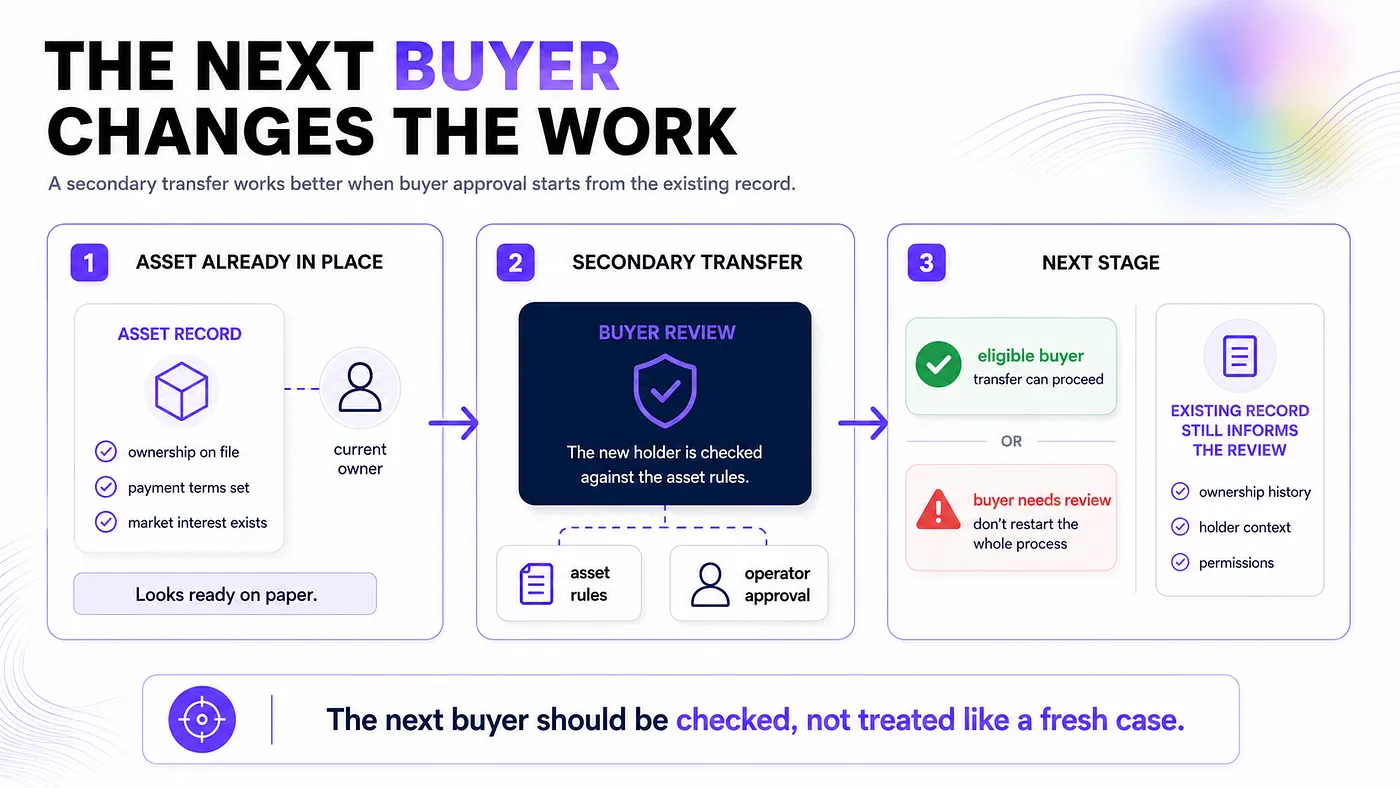
That's where most existing infrastructure still loses too much
context. A new participant arrives, and the process treats them like a
fresh case, even when the asset has already built a record that should
make the next review easier. The cost of moving the asset doesn't fall
the way it should as the track record gets longer, because the market
receives the token without enough of the surrounding history that
would make a later transfer cheaper to evaluate.
The rules of the asset have to recognise who is entering, and the
operator has to approve the change without turning the next stage of
the transaction into another compliance issue. A transfer can be
permitted and still be difficult enough to weaken the market around
it, because each new holder sends part of the process back into
review.
Buyers know this, and they look beyond the current purchase to the
next sale, where exit depends on someone else getting through the same
checks without delay or renegotiation.
Programmable compliance is trying to name a fairly ordinary business
problem. The work around an asset shouldn't restart every time
ownership changes, because if each transfer still depends on fresh
document handling, manual eligibility checks, and an operator
rebuilding the same confidence the last transaction already created,
tokenization hasn't made the market much easier to trade through, it's
put the same process behind a different wrapper.
That cost reaches the asset before it appears in any dashboard. A
buyer who expects the next transfer to be slow will price that into
the current one, and once that caution becomes normal, issuers have
less room to talk about liquidity as if secondary demand is already
solved.
The operating record needs to carry more of the process forward. If
the issuance flow has already established who can hold the asset, what
checks they passed, which restrictions apply, and how the asset has
been managed since launch, a later transfer shouldn't collapse back
into a blank token balance and a new round of admin.
Uptick's RWA flow keeps that work inside the issuer environment, where
KYC-based eligibility decisions and transfer-rule configuration stay
attached to the asset from issuance onward, so the next buyer doesn't
arrive as a blank case with a token attached.
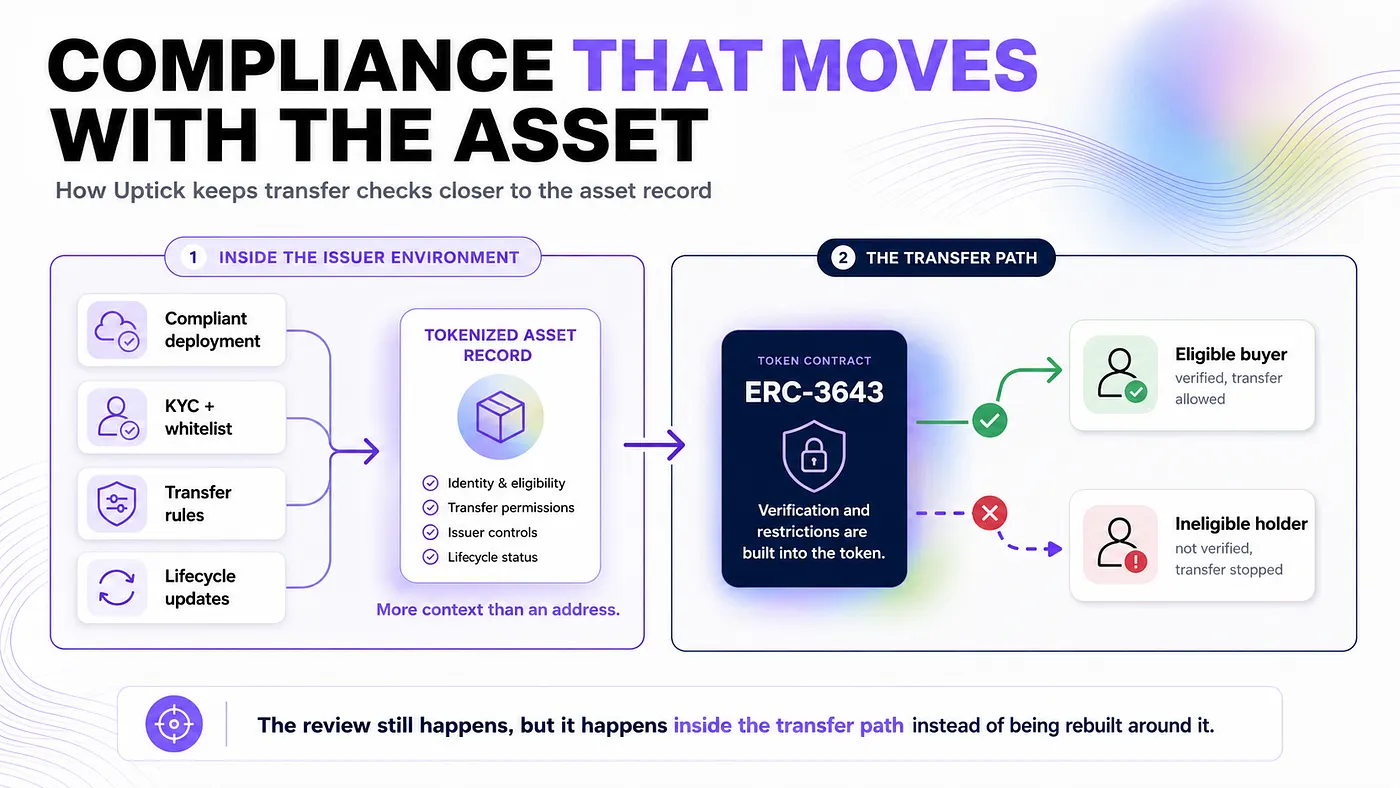
ERC-3643 brings that continuity into the transfer path. Uptick uses
the standard to embed KYC and AML verification and transfer
restrictions into the token contract, so the asset can reject an
ineligible holder before ownership changes hands. The check still has
to happen, but it happens closer to the asset's rules instead of
sitting beside the token as another review loop the market has to
rebuild each time.
Compliance overhead is one reason RWA activity keeps sliding toward
larger, institutionally packaged assets. The same review process
changes character when the transaction gets smaller, because a large
deal can survive lawyers, onboarding, approvals, and document handling
without losing its economic shape, but a smaller transfer has way less
room for that work before the process starts to outweigh the
opportunity it is supposed to support.
That creates a filter inside a market that is meant to include
operating businesses and smaller issuers, not only assets large enough
to justify institutional handling. The asset can be legitimate, the
buyer can be eligible, and the rules can be clear, but the transaction
still has to carry a process built for a much larger economic unit.
Over time, the market adapts around the procedure instead of the
asset, which pushes activity toward deals that can absorb repeated
review and leaves ordinary transfers looking too small to be worth
processing.
A better credential model changes the economics because the market
can't broaden if every transfer pays the full price of proving
information the system has already seen. A token standard can make the
asset movable, but it doesn't carry enough confidence by itself when
eligibility has to be rebuilt around every new participant. More of
that confidence has to travel with the participant and the asset
record, with proof that can be reused when it's still valid and
rejected when the underlying status has changed.
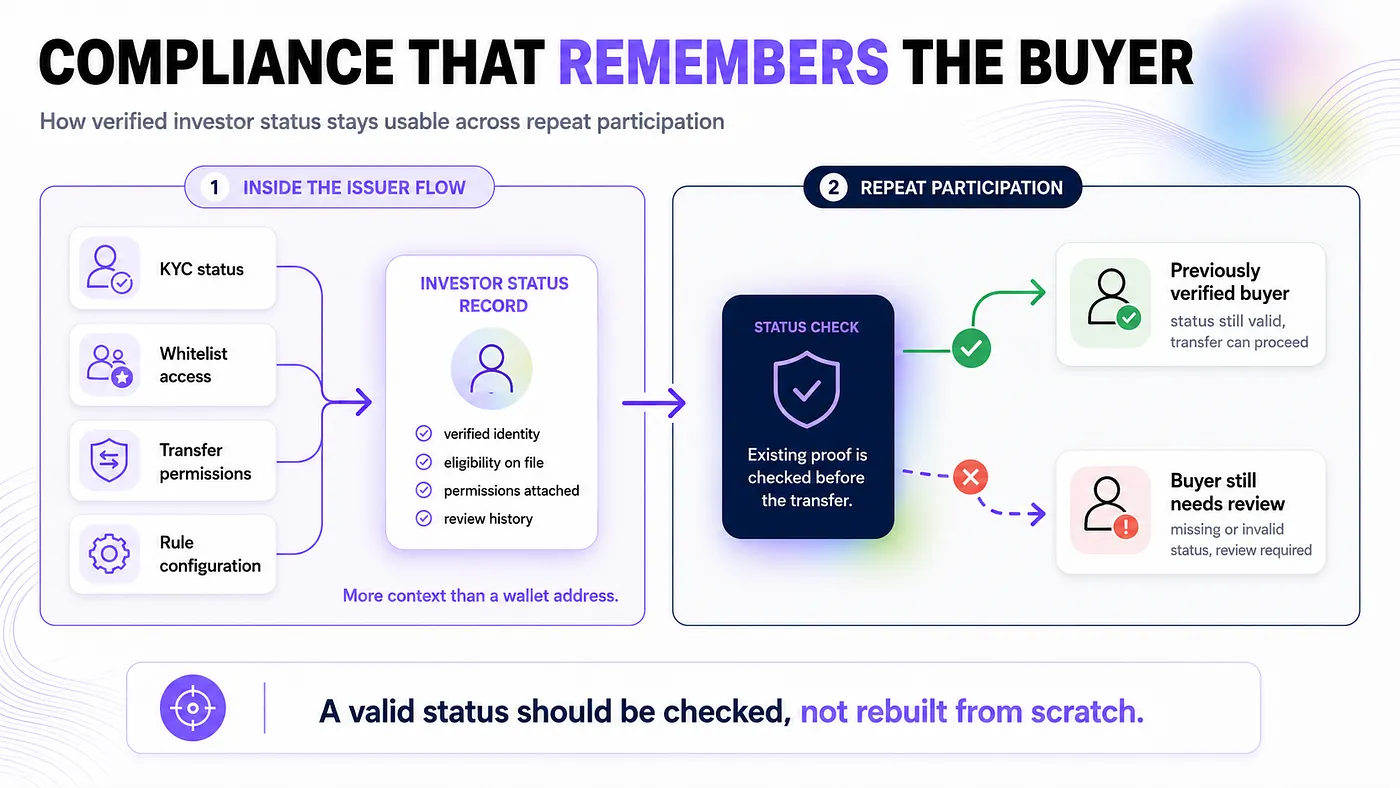
Uptick's compliance model gives the investor more history than a
wallet address at the edge of the asset. Because KYC status and
transfer permissions sit inside the issuer's management flow, the
system can separate a participant who's already cleared the relevant
checks from one who still needs them, rather than treating both as
arriving without history. The compliance decision still has to happen,
and ineligible transfers should still fail, but the same valid status
shouldn't behave like new information every time a buyer moves through
the market.
Uptick's DID and verifiable-credential layer goes further by letting
eligibility travel as a credential that can be issued once, checked by
another party without reopening the underlying file, and revoked when
the status changes, so the market can reuse proof that's still valid
rather than reconstructing it each time.
When a smaller issuer has to manage contract deployment in one place,
investor checks in another, transfer permissions somewhere else, and
distributions through another operating process, the transaction
starts carrying work that only larger deals can absorb. Uptick's
no-code issuance flow keeps that work in one environment, so the same
record that covers ERC-3643 deployment and KYC eligibility also
handles distributions and lifecycle updates rather than splitting
across tools the next buyer can't cross-reference.
That won't make a weak asset liquid, but it can stop a legitimate
smaller position from being filtered out because the process around it
was built for a much larger deal.
Domestic markets can hide weak compliance architecture for longer than
they should, because the same parties keep operating inside a familiar
legal and administrative frame. The paperwork is close by, the
assumptions are shared, and repeated checks can pass as normal process
rather than evidence that the market has no durable way to carry trust
forward. Cross-border activity removes that cover, because once a
tokenized asset leaves the environment where its first records were
created, the market has to know whether the right to hold it, move it,
and rely on its history still survives outside the original venue.
Cross-border business already runs on these resets, and tokenized
assets inherit the same problem when compliance logic stays attached
to the platform rather than the asset or the participant, so a new
market becomes another place where the asset has to be explained from
scratch even when the economic claim hasn't changed. A token can be
visible across more systems and still fail to carry the confidence
that makes transfer commercially usable.
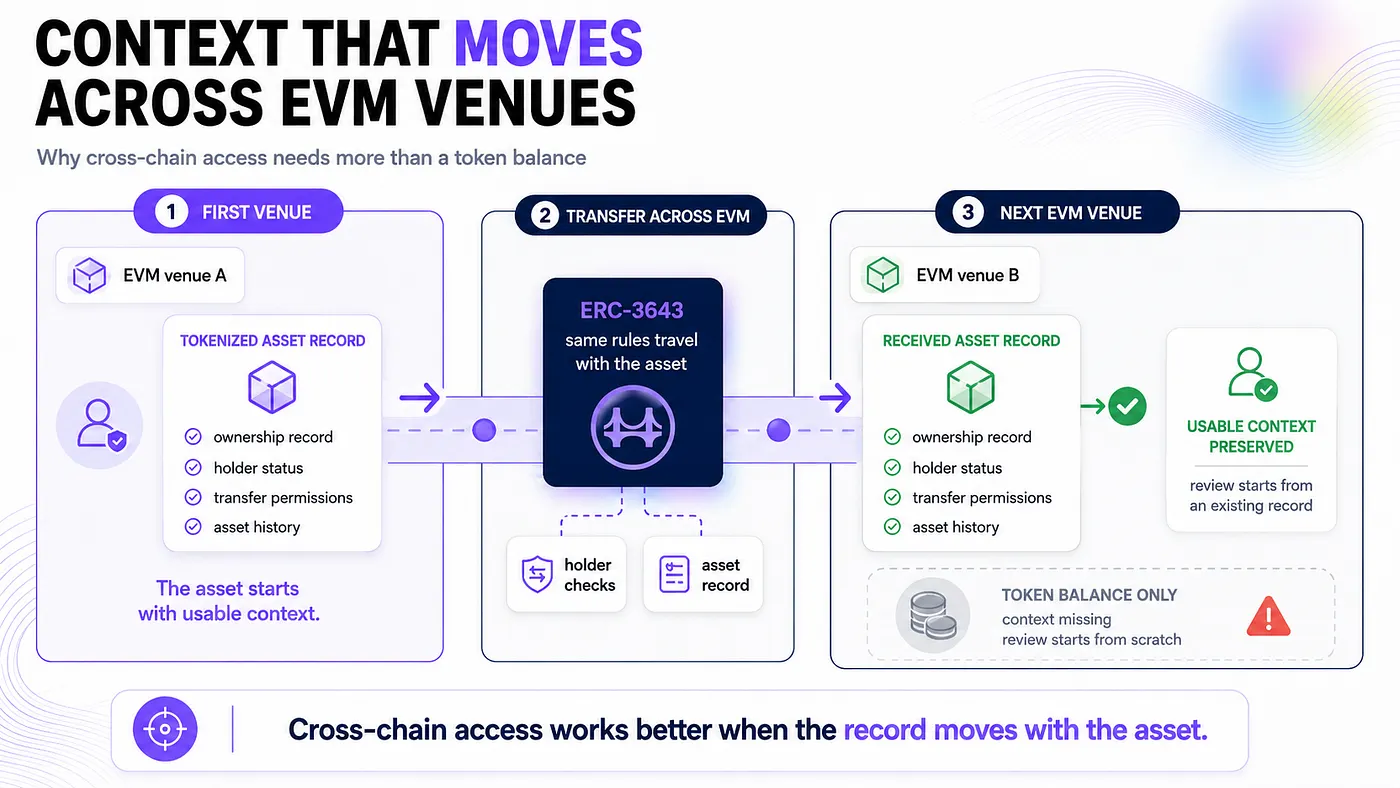
Real businesses need movement that preserves enough of the original
record for the next venue to understand what it is receiving, who is
allowed to touch it, and which conditions still govern it. The
commercial value of cross-chain movement depends on the asset keeping
the ownership context and permission history that make later
transactions possible, not simply passing a token balance from one
environment to another.
Uptick's ERC-3643 setup keeps movement across EVM environments tied to
the same holder checks and asset record, so cross-chain access doesn't
turn into another place where the asset arrives without usable
context.
Most businesses aren't asking for looser rules, they're asking for
compliance work to stop collapsing back to zero whenever an asset
moves into a new context. A buyer whose status is still valid
shouldn't need to be explained from the beginning, and an asset with a
usable operating record shouldn't lose that record just because
ownership changes or capital crosses into another venue.
Much of the friction comes from the gap between having rules and
having infrastructure that can satisfy them without constant manual
reconstruction. A legitimate asset can have a real buyer and a real
economic reason to move, but still slow down because too much
confidence gets lost between one state and the next. The same
documents get repackaged, permissions have to be explained again, and
participants get pulled back into work the system should have left
behind as usable context. Compliance still serves a necessary
function, but the market starts paying for the same confidence too
many times.
Rules still apply, and ineligible transfers should still fail, but the
market works differently when the next participant can rely on
eligibility and asset history in a form that can actually be used
rather than rebuilt on arrival. Selective disclosure belongs in that
structure because the next venue may only need to verify a specific
claim, not reopen the whole underlying file.
Distribution records and transfer history shape how the next buyer
understands the asset and what the issuer can safely allow, and when
that record is spread across emails, administrator reports, and
platform accounts rather than kept close to the asset, later buyers
inherit opacity instead of context.
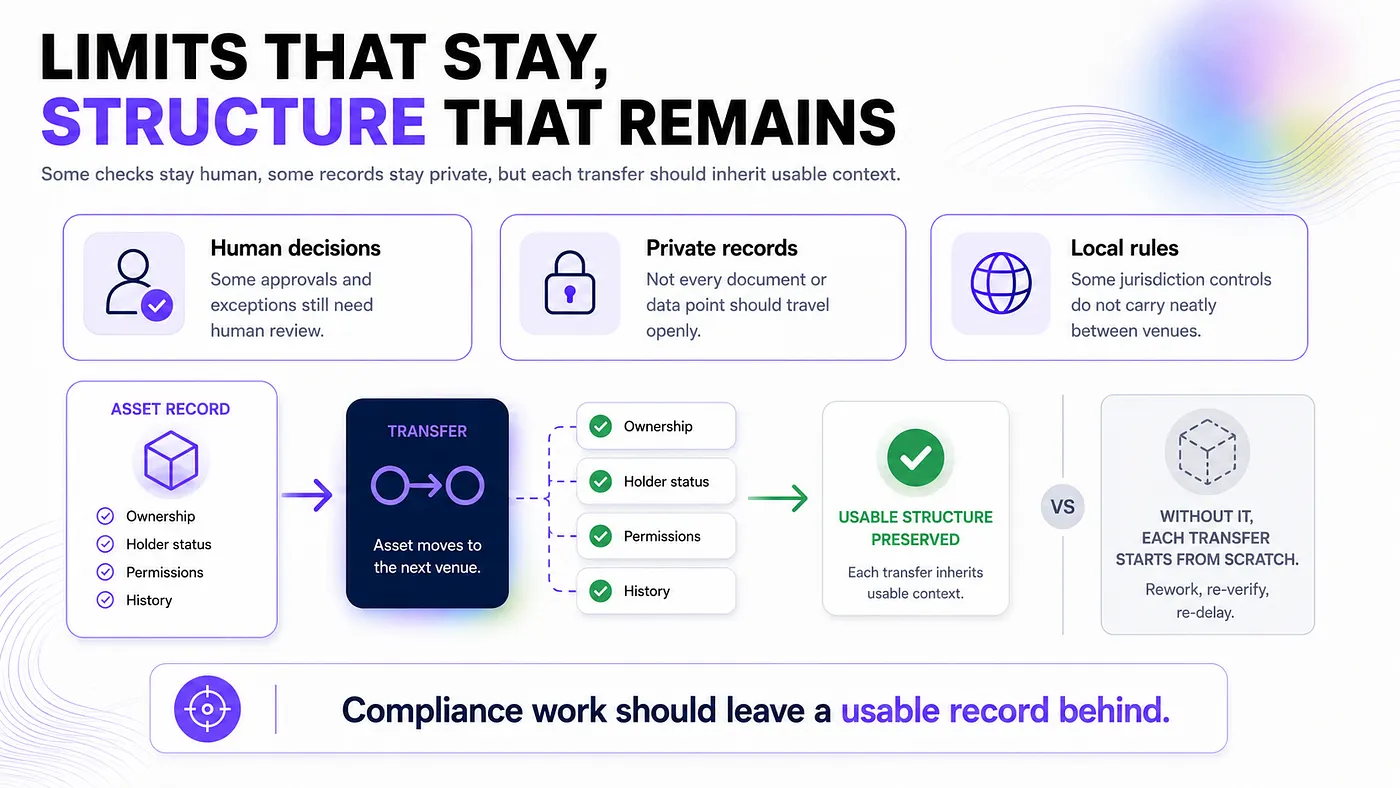
None of this removes the limits around the asset. Some decisions stay
human, and some jurisdictions need controls that don't travel neatly
between venues, but a market can't mature if every transaction behaves
as though no previous state exists. Compliance work should leave
usable structure behind, otherwise the same confidence has to be
bought again each time the asset moves.
Issuer control also has to stay available when real-world rules make
the current token state impossible to leave alone. A compliant market
can't rely only on transfers passing or failing at the edge, because
court orders and compliance violations can force the issuer to correct
the record after ownership has already moved. Uptick's recoverable
asset controls keep that authority inside the tokenized asset
environment, with authorized issuers able to freeze, transfer, or
recover tokens when the legal position changes, so the digital record
doesn't keep pretending the old state still holds.

Good assets still get held up when the token layer moves faster than
the trust around it. Markets can create digital ownership and
transferability quickly, but confidence around whether the next holder
is allowed to receive the asset under real-world rules is slower to
carry forward. When that confidence resets at each transfer, the token
keeps its clean structure, but the asset becomes much harder to use
than it looks.
Reducing waste doesn't require weaker rules, it requires the proof
created around the asset to survive the next movement in a form the
market can actually use.
Uptick keeps that work inside one operating path, with ERC-3643
transfer rules staying tied to verified holder status and the issuer
retaining the ability to recover or freeze the record when legal
reality changes, so the compliance decisions from earlier transfers
stay close enough to the asset that the next participant can use what
the market already knows.
The rules stay, and the checks still have to hold. What changes is
whether a valid transfer can carry enough history forward that the
market doesn't have to buy the same confidence again every time the
asset moves.